
Sensors
Compare part numbers, availability and supply options.
-
 Pre-order
15D-60-1
Linear Angle Sensor
Price on request -
Pre-order
2S-150AM
Dual Pressure Switch
Price on request -
Pre-order
2S-210AM
Dual Pressure Switch
Price on request -
Pre-order
2S-30AM
Dual Pressure Switch
Price on request -
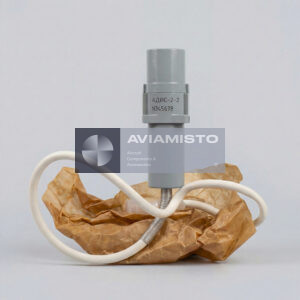 Out of stock
ADIS-2-2
Single-axis compensated accelerometer
Price on request -
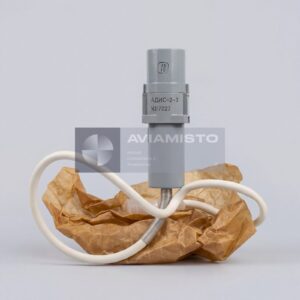 Out of stock
ADIS-2-3
Accelerometer
Price on request -
Pre-order
AUASP-10
Angle-of-Attack System
Price on request -
Pre-order
AUASP-10R
Angle-of-Attack System
Price on request -
Pre-order
AUASP-14KR
Angle-of-Attack System
Price on request -
Pre-order
AUASP-15KR
Angle-of-Attack System
Price on request -
Pre-order
AUASP-16KR
Angle-of-Attack System
Price on request -
Pre-order
AUASP-18KR
Angle-of-Attack System
Price on request -
Pre-order
AUASP-19R
Angle-of-Attack System
Price on request -
Pre-order
AUASP-20R
Angle-of-Attack System
Price on request -
Pre-order
AUASP-24KR
Angle-of-Attack System
Price on request -
Pre-order
AUASP-25R
Angle-of-Attack System
Price on request -
Pre-order
AUASP-26R
Angle-of-Attack System
Price on request -
Pre-order
AUASP-28R
Angle-of-Attack System
Price on request -
Pre-order
AUASP-29R
Angle-of-Attack System
Price on request -
Pre-order
AUASP-31KR
Angle-of-Attack System
Price on request -
Pre-order
AUASP-6KR
Angle-of-Attack System
Price on request -
Pre-order
DA-11
Precision Linear Accelerometer
Price on request -
Pre-order
DAP-2.5
Absolute Pressure Sensor
Price on request -
Pre-order
DAP-7
Absolute Pressure Sensor
Price on request -
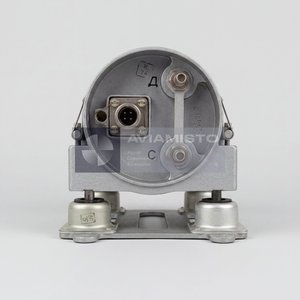 In stock
DAS
Sensor
Price on request -
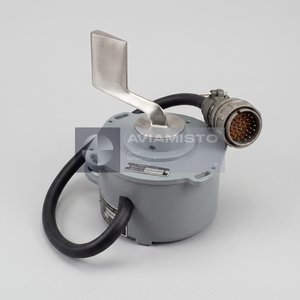 Pre-order
DAU-12
Aerodynamic Angle Sensor
Price on request -
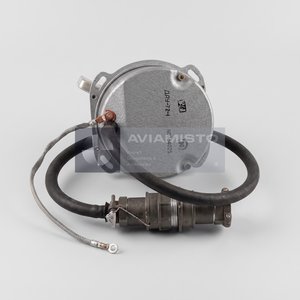 Pre-order
DAU-72-1
Aerodynamic Angle Sensor
Price on request -
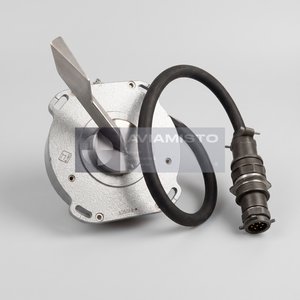 Pre-order
DAU-72-4-1
Aerodynamic Angle Sensor
Price on request -
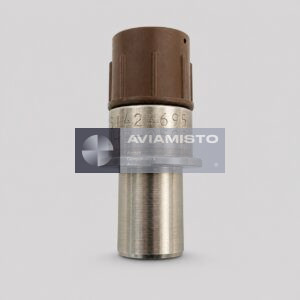 In stock
DChV-2500
Speed Inductive Sensor
Price on request -
Pre-order
DDC-1
Oxygen Consumption Sensor
Price on request -
Pre-order
DDII-0.85
Differential Pressure Sensor
Price on request -
Pre-order
DDK-1M
Oxygen Pressure Sensor
Price on request -
Pre-order
DLU-26-07
Linear Acceleration Sensor
Price on request -
Pre-order
DLUK-10
Linear Acceleration Sensor
Price on request -
Pre-order
DLUK-20
Linear Acceleration Sensor
Price on request -
Pre-order
DLUK-5
Linear Acceleration Sensor
Price on request


About this category
Aircraft sensors, transmitters and measuring devices in this category are indexed by exact Part Number and sensed parameter. The range spans angle, acceleration, pressure, position and other input functions used by separately documented onboard systems. A common parameter does not make two sensors equivalent because range, output and installation can differ.
Input devices for different aircraft parameters
Examples include the 15D-60-1 linear angle sensor, 2S-series dual pressure switches, ADIS accelerometers and AUASP angle-of-attack system positions. These items belong to different measurement chains and should be searched by their own full designation. A system name may help narrow the enquiry but does not replace the number on the component.
Range, signal and interface guide identification
Useful matching data can include measured parameter, operating range, signal type, supply, connector, mounting position and associated indicator or processing unit. Reconcile the label and installation record with the applicable parts catalogue or maintenance data. Avoid treating a visually similar sensor as an approved substitute.
- record the exact sensor designation;
- state the measured parameter and range;
- identify the related system or instrument;
- attach photographs of labels and connectors;
- specify quantity and required records.
Search and request the exact sensing device
Choose the matching card to request confirmation of identity, available condition, documentation, price and supply timing. Temperature- and pressure-specific equipment is grouped under Pressure and Temperature Sensors. Altitude and indication equipment can be found in Altimeters and Indicators.