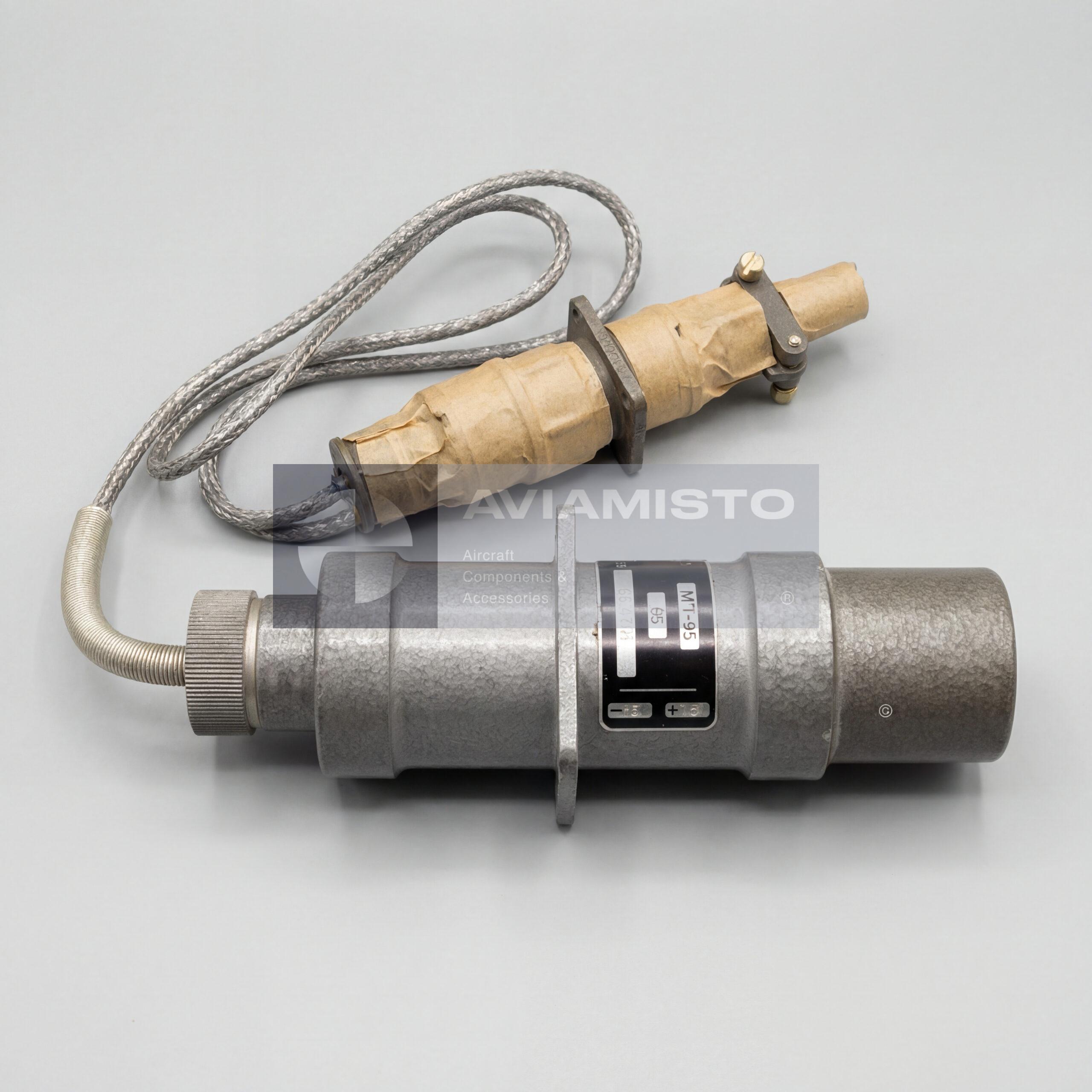
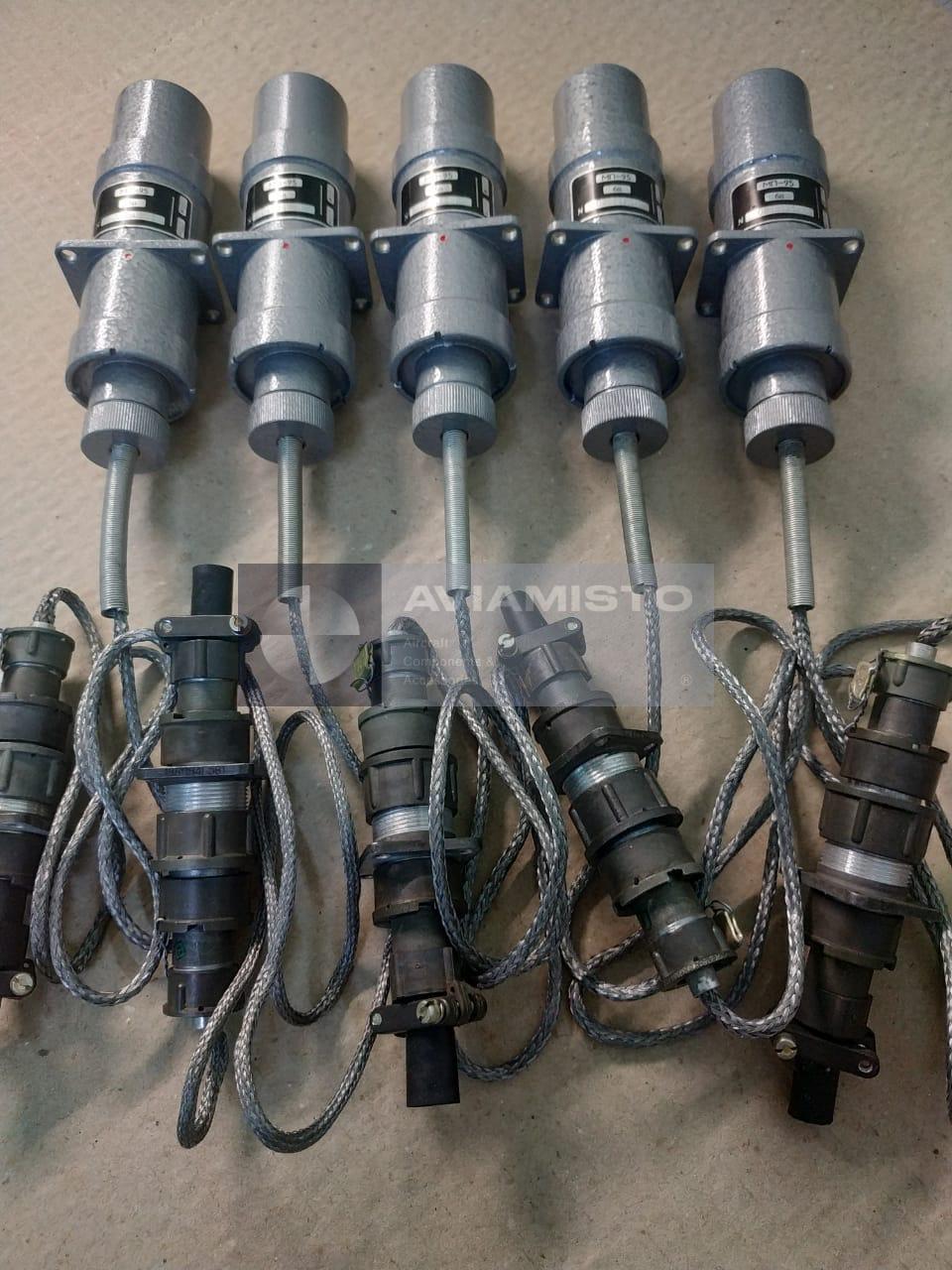
MP-95 (-1+3) Aircraft Overload Sensor
×

Login by Email

Custom order 0
Back to catalog
PRE-ORDER
PRE-ORDER

potentiometric sensor

MP-95 (-1+3)

Warranty:6-mo
Price on request
Price on request

Description

MP-95 (-1+3) in aircraft overload measurement systems

The MP-95 (-1+3) is a potentiometric aircraft overload sensor designed to measure linear acceleration acting on the aircraft structure. It is used in onboard flight parameter measurement and recording systems, where overload data must be converted into a signal suitable for further processing and registration. The designation “-1+3” indicates the measuring range of the sensor: from negative overload to positive overload within the specified limits.

Overload measurement function of MP-95 (-1+3)

The main task of the MP-95 (-1+3) is to detect linear overload and convert the measured acceleration into an electrical resistance value. This resistive output is then used by onboard recording or monitoring equipment. In practical aircraft operation, the sensor helps register load-factor-related data during flight, maneuvering, takeoff, landing and other operating modes. Since it works as a measurement sensor, correct installation direction and calibration condition are important for reliable data.

Potentiometric principle of the MP-95 sensor

The MP-95 works by converting mechanical displacement inside the sensor into a change of potentiometer resistance. When acceleration acts on the sensing mass, the internal mechanism moves, and this movement changes the resistance value. The connected recording system then interprets this resistance as an overload value. This is a relatively simple and robust measurement principle, but it still depends on the condition of the potentiometer, mechanical movement, wiring and the receiving equipment.

Damping system in MP-95 (-1+3)

The internal volume of the MP-95 sensor is filled with a special silicone-organic damping fluid. This fluid helps suppress oscillations of the sensing mechanism and prevents unstable output during vibration or short mechanical disturbances. For aircraft use, damping is important because the sensor must respond to actual overload changes rather than random vibration. During inspection, leakage, contamination or degradation of the damping section should be treated seriously, as these issues can affect the accuracy and stability of the output signal.

MP-95 in flight data recording equipment

The MP-95 (-1+3) is used in automatic flight parameter recording systems and other onboard monitoring equipment. In this role, it supplies overload information to the recorder, where the value is stored together with other flight parameters. The recorded overload channel may be used for technical analysis, service monitoring or investigation of abnormal events. If the recorded overload data is incorrect, the cause may be the sensor itself, but also the wiring, connector, calibration, input channel or recorder unit.

Supply and inspection of MP-95 (-1+3)

For procurement or replacement, the full designation MP-95 (-1+3) / МП-95 (-1+3) should be specified. The measuring range must be confirmed because similar overload sensors may have different ranges and cannot always be substituted by appearance alone. Before installation, the sensor should be checked for marking, housing condition, connector integrity, potentiometer resistance, smooth output change, damping condition and compatibility with the aircraft recording system. Product passport and technical documentation should be supplied where available.

Details

Product Type: Potentiometric aircraft overload sensor
Designation: MP-95 (-1+3)
Alternative Designation: МП-95 (-1+3)
Function: Measurement of linear acceleration and conversion into electrical resistance
Application / Where Used: Aircraft flight parameter measurement and recording systems
System / Installation Area: Onboard measurement and recording equipment
Measured Parameter: Linear overload / acceleration
Measured Acceleration Range: −1 to +3 g
Output Type: Potentiometric resistance output
Potentiometer Resistance: 1533 Ω
Piston Travel per 1 g Overload: 2.5 mm
Damping Medium: Silicone-organic damping fluid
Operating Principle: Mechanical displacement of sensing mass converted into potentiometer resistance change
Dimensions: 133 × 45 mm
Weight: 0.34 kg
Assigned Resource: 200 h
Assigned Service Life: 4 years
Storage Life: 2 years
Condition: As applicable
Technical Documentation: MP-95 sensor passport, TU 6L2.775.001TU

Payment & delivery

All shipments are carried out from our international warehouse in Dubai (UAE), as well as from our partners’ remote warehouses.

In Stock — items available in stock at the Dubai warehouse are dispatched within 5–10 business days after receiving 100% prepayment.

Remote Stock — items available at our partners’ remote warehouses are supplied within an average of 30–45 business days after receiving 100% prepayment.

Pre-Order — made-to-order products are manufactured and delivered within an average of 45–60 business days. Payment terms: 50% advance payment to start production, with the remaining 50% paid before dispatch from the Dubai warehouse after full readiness for shipment.

Returns & Changes (Restocking Fee)
For selected items, a RESTOCKING FEE of 10% may apply in case of return, order cancellation, or changes to the order specifications. This condition applies only to certain products and is confirmed at the order approval stage.

Warranty
All products are covered by a standard 6-month warranty.
Extended warranty is available upon request and is agreed individually; it may affect the final product price.

  • Description
  • Details
  • Payment & delivery

MP-95 (-1+3) in aircraft overload measurement systems

The MP-95 (-1+3) is a potentiometric aircraft overload sensor designed to measure linear acceleration acting on the aircraft structure. It is used in onboard flight parameter measurement and recording systems, where overload data must be converted into a signal suitable for further processing and registration. The designation “-1+3” indicates the measuring range of the sensor: from negative overload to positive overload within the specified limits.

Overload measurement function of MP-95 (-1+3)

The main task of the MP-95 (-1+3) is to detect linear overload and convert the measured acceleration into an electrical resistance value. This resistive output is then used by onboard recording or monitoring equipment. In practical aircraft operation, the sensor helps register load-factor-related data during flight, maneuvering, takeoff, landing and other operating modes. Since it works as a measurement sensor, correct installation direction and calibration condition are important for reliable data.

Potentiometric principle of the MP-95 sensor

The MP-95 works by converting mechanical displacement inside the sensor into a change of potentiometer resistance. When acceleration acts on the sensing mass, the internal mechanism moves, and this movement changes the resistance value. The connected recording system then interprets this resistance as an overload value. This is a relatively simple and robust measurement principle, but it still depends on the condition of the potentiometer, mechanical movement, wiring and the receiving equipment.

Damping system in MP-95 (-1+3)

The internal volume of the MP-95 sensor is filled with a special silicone-organic damping fluid. This fluid helps suppress oscillations of the sensing mechanism and prevents unstable output during vibration or short mechanical disturbances. For aircraft use, damping is important because the sensor must respond to actual overload changes rather than random vibration. During inspection, leakage, contamination or degradation of the damping section should be treated seriously, as these issues can affect the accuracy and stability of the output signal.

MP-95 in flight data recording equipment

The MP-95 (-1+3) is used in automatic flight parameter recording systems and other onboard monitoring equipment. In this role, it supplies overload information to the recorder, where the value is stored together with other flight parameters. The recorded overload channel may be used for technical analysis, service monitoring or investigation of abnormal events. If the recorded overload data is incorrect, the cause may be the sensor itself, but also the wiring, connector, calibration, input channel or recorder unit.

Supply and inspection of MP-95 (-1+3)

For procurement or replacement, the full designation MP-95 (-1+3) / МП-95 (-1+3) should be specified. The measuring range must be confirmed because similar overload sensors may have different ranges and cannot always be substituted by appearance alone. Before installation, the sensor should be checked for marking, housing condition, connector integrity, potentiometer resistance, smooth output change, damping condition and compatibility with the aircraft recording system. Product passport and technical documentation should be supplied where available.

Product Type: Potentiometric aircraft overload sensor
Designation: MP-95 (-1+3)
Alternative Designation: МП-95 (-1+3)
Function: Measurement of linear acceleration and conversion into electrical resistance
Application / Where Used: Aircraft flight parameter measurement and recording systems
System / Installation Area: Onboard measurement and recording equipment
Measured Parameter: Linear overload / acceleration
Measured Acceleration Range: −1 to +3 g
Output Type: Potentiometric resistance output
Potentiometer Resistance: 1533 Ω
Piston Travel per 1 g Overload: 2.5 mm
Damping Medium: Silicone-organic damping fluid
Operating Principle: Mechanical displacement of sensing mass converted into potentiometer resistance change
Dimensions: 133 × 45 mm
Weight: 0.34 kg
Assigned Resource: 200 h
Assigned Service Life: 4 years
Storage Life: 2 years
Condition: As applicable
Technical Documentation: MP-95 sensor passport, TU 6L2.775.001TU

All shipments are carried out from our international warehouse in Dubai (UAE), as well as from our partners’ remote warehouses.

In Stock — items available in stock at the Dubai warehouse are dispatched within 5–10 business days after receiving 100% prepayment.

Remote Stock — items available at our partners’ remote warehouses are supplied within an average of 30–45 business days after receiving 100% prepayment.

Pre-Order — made-to-order products are manufactured and delivered within an average of 45–60 business days. Payment terms: 50% advance payment to start production, with the remaining 50% paid before dispatch from the Dubai warehouse after full readiness for shipment.

Returns & Changes (Restocking Fee)
For selected items, a RESTOCKING FEE of 10% may apply in case of return, order cancellation, or changes to the order specifications. This condition applies only to certain products and is confirmed at the order approval stage.

Warranty
All products are covered by a standard 6-month warranty.
Extended warranty is available upon request and is agreed individually; it may affect the final product price.

Didn’t find the parts you need? Contact us — we will assist in sourcing them.

Send your request — we will provide availability, lead time, pricing, and delivery details.
Share