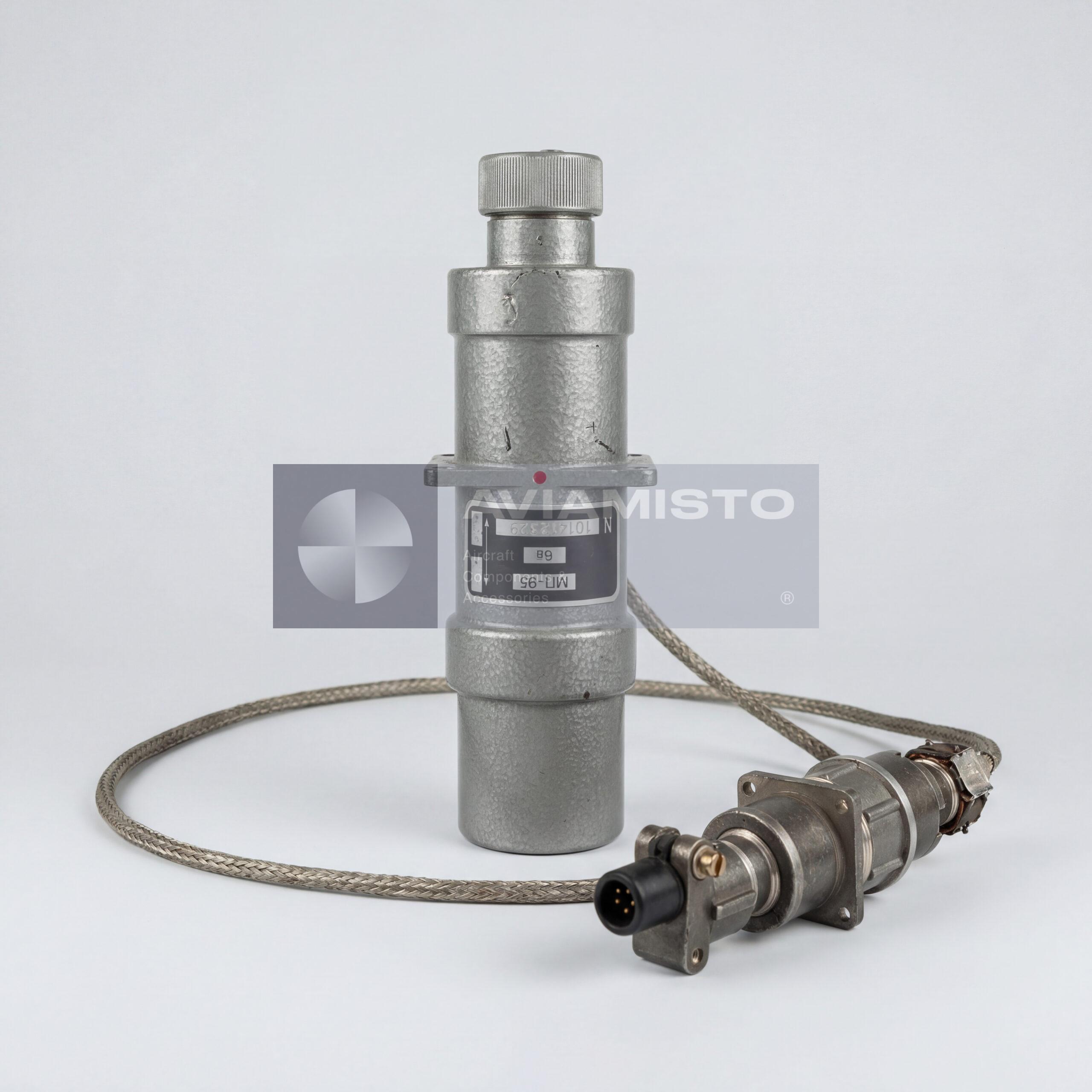
Potentiometric overload sensor
Price on request
Potentiometric overload sensor
Available on back-order
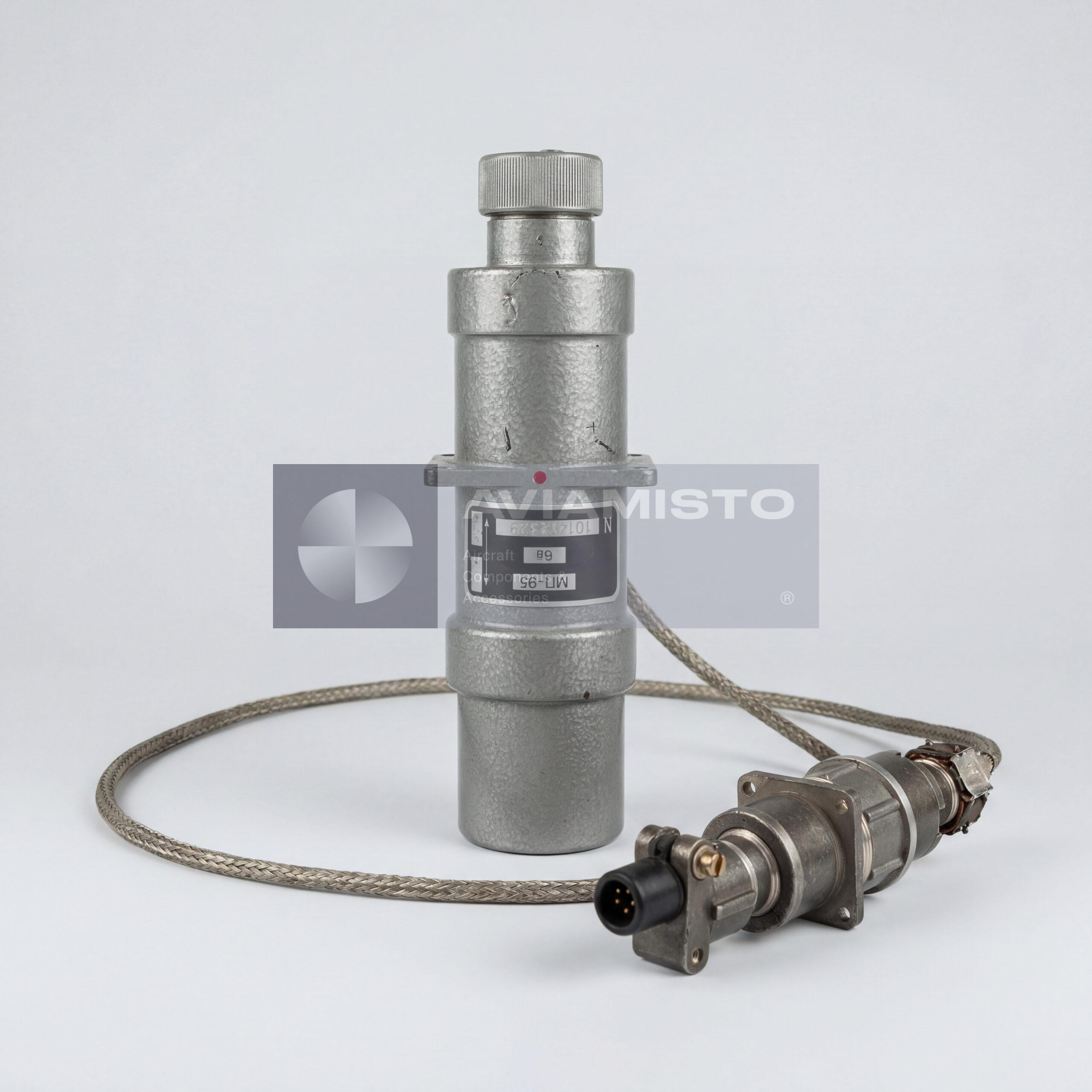
The MP-95 ±1.5 is a potentiometric aircraft overload sensor designed to measure linear accelerations acting on the aircraft structure. It is used in onboard measurement and flight parameter recording systems, where overload values must be converted into an electrical signal for further processing. The sensor itself does not record flight data. It works as a measuring element that provides a resistance output proportional to the measured acceleration.
This version of the MP-95 is intended for a symmetric measuring range from −1.5 g to +1.5 g. The “±1.5” designation identifies the specific overload range of this execution. This version is used where relatively moderate positive and negative accelerations must be measured with the same limit in both directions. During replacement, the exact range must be checked carefully, because other MP-95 sensors may have different limits, including asymmetric versions such as −1+3 or −3.5+10.
The MP-95 converts mechanical displacement caused by acceleration into a change in electrical resistance. Under overload, the internal sensing element moves, and the potentiometer produces a resistance value corresponding to the applied acceleration. This output is then used by onboard measuring or recording equipment. For correct operation, the receiving channel must match the sensor resistance, measurement range and calibration characteristics. A wrong-range sensor may physically fit but give incorrect recorded values.
The MP-95 ±1.5 is used in automatic flight parameter recording systems and related onboard monitoring equipment. It supplies overload data to the aircraft recording channel, where the signal can be stored together with other flight parameters. These data may be used for operational monitoring, technical analysis and investigation of abnormal flight regimes. If overload values are recorded incorrectly, the cause may be in the sensor, wiring, connector, mounting position, calibration or the receiving recorder channel.
The MP-95 is a mechanical-electrical measuring device. In versions of this sensor family, the internal sensing movement is damped to stabilize the output signal and reduce excessive oscillation under vibration or sudden acceleration changes. This is important because aircraft structures are exposed not only to real maneuvering loads, but also to vibration, shock and transient effects. For this reason, inspection should include both electrical output and mechanical behavior of the sensing mechanism.
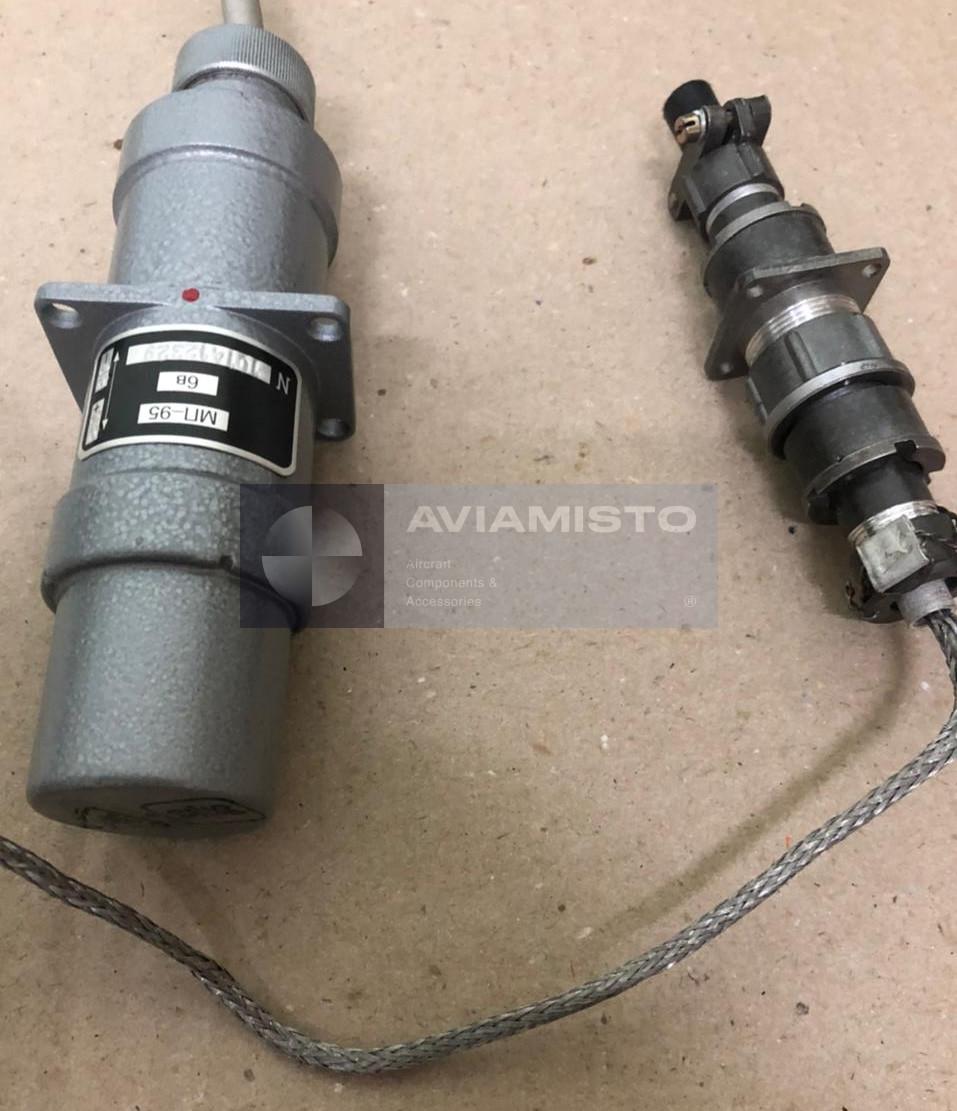
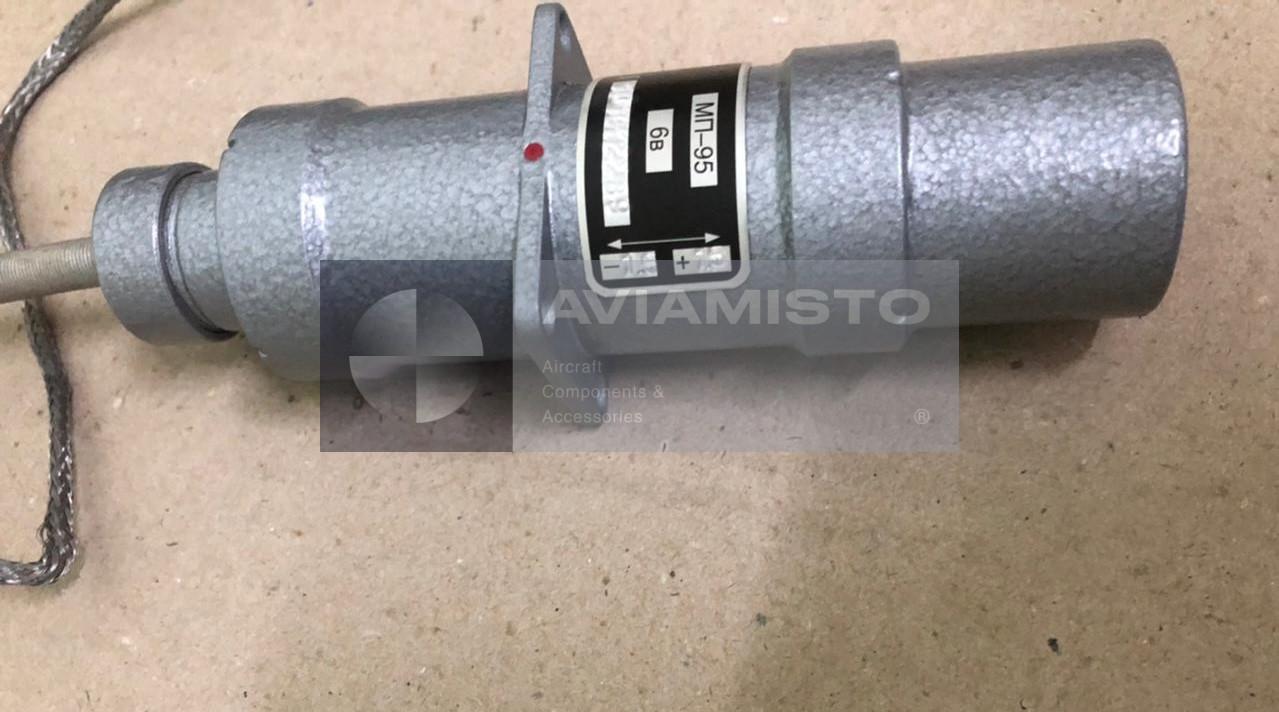
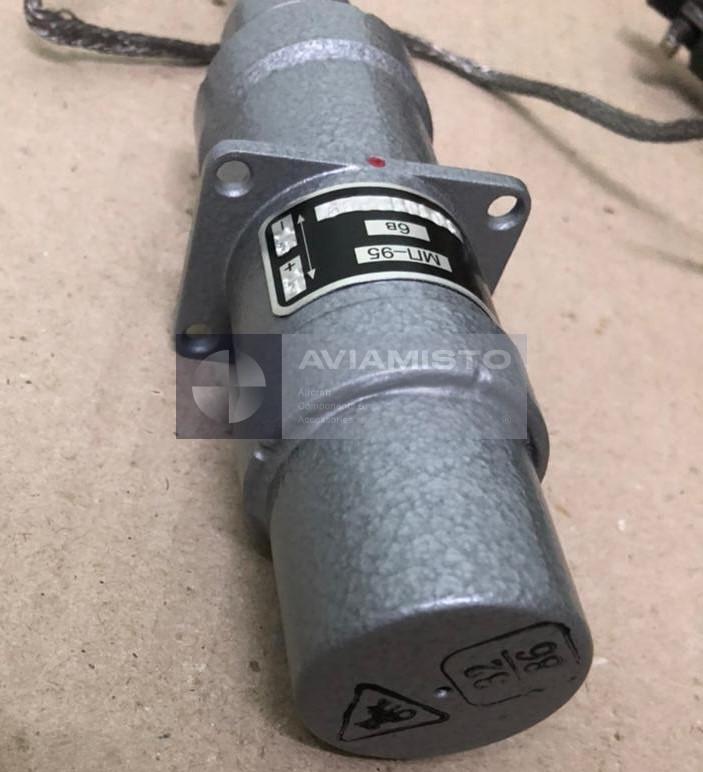
The sensor must be installed according to the required measurement axis and aircraft documentation. Before installation, the MP-95 ±1.5 should be checked for correct marking, measurement range, housing condition, connector condition, output resistance behavior and absence of mechanical damage. External appearance alone is not enough to confirm serviceability. Since the sensor has assigned resource, service life and storage life limits, passport data and storage history should be reviewed before aircraft use.
For procurement or replacement, the full designation MP-95 ±1.5 / МП-95 ±1.5 should be specified. The required condition, aircraft application and documentation should also be confirmed before shipment. The unit may be supplied as new, from storage, repaired or tested serviceable depending on availability. For aviation use, the sensor passport, acceptance documents or official technical documentation should be available wherever possible.
Product Type: Potentiometric aircraft overload sensor
Designation: MP-95 ±1.5
Alternative Designation: МП-95 ±1.5
Function: Measurement of linear acceleration and conversion into electrical resistance
Application / Where Used: Aircraft flight parameter measurement and recording systems
System / Installation Area: Onboard measurement and recording equipment
Measured Parameter: Linear overload / acceleration
Measured Acceleration Range: −1.5 to +1.5 g
Output Type: Potentiometric resistance output
Potentiometer Resistance: 1533 Ω
Piston Travel per 1 g Overload: 2.5 mm
Operating Principle: Conversion of mechanical displacement caused by acceleration into resistance change
Dimensions: 133 × 45 mm
Weight: 0.34 kg
Assigned Resource: 200 h
Assigned Service Life: 4 years
Storage Life: 2 years
Inspection / Testing: Marking check, range verification, connector inspection, output resistance check, housing inspection and compatibility verification
Condition: As applicable
Technical Documentation: MP-95 sensor passport, TU 6L2.775.001TU
All shipments are carried out from our international warehouse in Dubai (UAE), as well as from our partners’ remote warehouses.
In Stock — items available in stock at the Dubai warehouse are dispatched within 5–10 business days after receiving 100% prepayment.
Remote Stock — items available at our partners’ remote warehouses are supplied within an average of 30–45 business days after receiving 100% prepayment.
Pre-Order — made-to-order products are manufactured and delivered within an average of 45–60 business days. Payment terms: 50% advance payment to start production, with the remaining 50% paid before dispatch from the Dubai warehouse after full readiness for shipment.
Returns & Changes (Restocking Fee)
For selected items, a RESTOCKING FEE of 10% may apply in case of return, order cancellation, or changes to the order specifications. This condition applies only to certain products and is confirmed at the order approval stage.
Warranty
All products are covered by a standard 6-month warranty.
Extended warranty is available upon request and is agreed individually; it may affect the final product price.
The MP-95 ±1.5 is a potentiometric aircraft overload sensor designed to measure linear accelerations acting on the aircraft structure. It is used in onboard measurement and flight parameter recording systems, where overload values must be converted into an electrical signal for further processing. The sensor itself does not record flight data. It works as a measuring element that provides a resistance output proportional to the measured acceleration.
This version of the MP-95 is intended for a symmetric measuring range from −1.5 g to +1.5 g. The “±1.5” designation identifies the specific overload range of this execution. This version is used where relatively moderate positive and negative accelerations must be measured with the same limit in both directions. During replacement, the exact range must be checked carefully, because other MP-95 sensors may have different limits, including asymmetric versions such as −1+3 or −3.5+10.
The MP-95 converts mechanical displacement caused by acceleration into a change in electrical resistance. Under overload, the internal sensing element moves, and the potentiometer produces a resistance value corresponding to the applied acceleration. This output is then used by onboard measuring or recording equipment. For correct operation, the receiving channel must match the sensor resistance, measurement range and calibration characteristics. A wrong-range sensor may physically fit but give incorrect recorded values.
The MP-95 ±1.5 is used in automatic flight parameter recording systems and related onboard monitoring equipment. It supplies overload data to the aircraft recording channel, where the signal can be stored together with other flight parameters. These data may be used for operational monitoring, technical analysis and investigation of abnormal flight regimes. If overload values are recorded incorrectly, the cause may be in the sensor, wiring, connector, mounting position, calibration or the receiving recorder channel.
The MP-95 is a mechanical-electrical measuring device. In versions of this sensor family, the internal sensing movement is damped to stabilize the output signal and reduce excessive oscillation under vibration or sudden acceleration changes. This is important because aircraft structures are exposed not only to real maneuvering loads, but also to vibration, shock and transient effects. For this reason, inspection should include both electrical output and mechanical behavior of the sensing mechanism.
The sensor must be installed according to the required measurement axis and aircraft documentation. Before installation, the MP-95 ±1.5 should be checked for correct marking, measurement range, housing condition, connector condition, output resistance behavior and absence of mechanical damage. External appearance alone is not enough to confirm serviceability. Since the sensor has assigned resource, service life and storage life limits, passport data and storage history should be reviewed before aircraft use.
For procurement or replacement, the full designation MP-95 ±1.5 / МП-95 ±1.5 should be specified. The required condition, aircraft application and documentation should also be confirmed before shipment. The unit may be supplied as new, from storage, repaired or tested serviceable depending on availability. For aviation use, the sensor passport, acceptance documents or official technical documentation should be available wherever possible.
Product Type: Potentiometric aircraft overload sensor
Designation: MP-95 ±1.5
Alternative Designation: МП-95 ±1.5
Function: Measurement of linear acceleration and conversion into electrical resistance
Application / Where Used: Aircraft flight parameter measurement and recording systems
System / Installation Area: Onboard measurement and recording equipment
Measured Parameter: Linear overload / acceleration
Measured Acceleration Range: −1.5 to +1.5 g
Output Type: Potentiometric resistance output
Potentiometer Resistance: 1533 Ω
Piston Travel per 1 g Overload: 2.5 mm
Operating Principle: Conversion of mechanical displacement caused by acceleration into resistance change
Dimensions: 133 × 45 mm
Weight: 0.34 kg
Assigned Resource: 200 h
Assigned Service Life: 4 years
Storage Life: 2 years
Inspection / Testing: Marking check, range verification, connector inspection, output resistance check, housing inspection and compatibility verification
Condition: As applicable
Technical Documentation: MP-95 sensor passport, TU 6L2.775.001TU
All shipments are carried out from our international warehouse in Dubai (UAE), as well as from our partners’ remote warehouses.
In Stock — items available in stock at the Dubai warehouse are dispatched within 5–10 business days after receiving 100% prepayment.
Remote Stock — items available at our partners’ remote warehouses are supplied within an average of 30–45 business days after receiving 100% prepayment.
Pre-Order — made-to-order products are manufactured and delivered within an average of 45–60 business days. Payment terms: 50% advance payment to start production, with the remaining 50% paid before dispatch from the Dubai warehouse after full readiness for shipment.
Returns & Changes (Restocking Fee)
For selected items, a RESTOCKING FEE of 10% may apply in case of return, order cancellation, or changes to the order specifications. This condition applies only to certain products and is confirmed at the order approval stage.
Warranty
All products are covered by a standard 6-month warranty.
Extended warranty is available upon request and is agreed individually; it may affect the final product price.