
BDG-25 version 7
damping gyroscope block
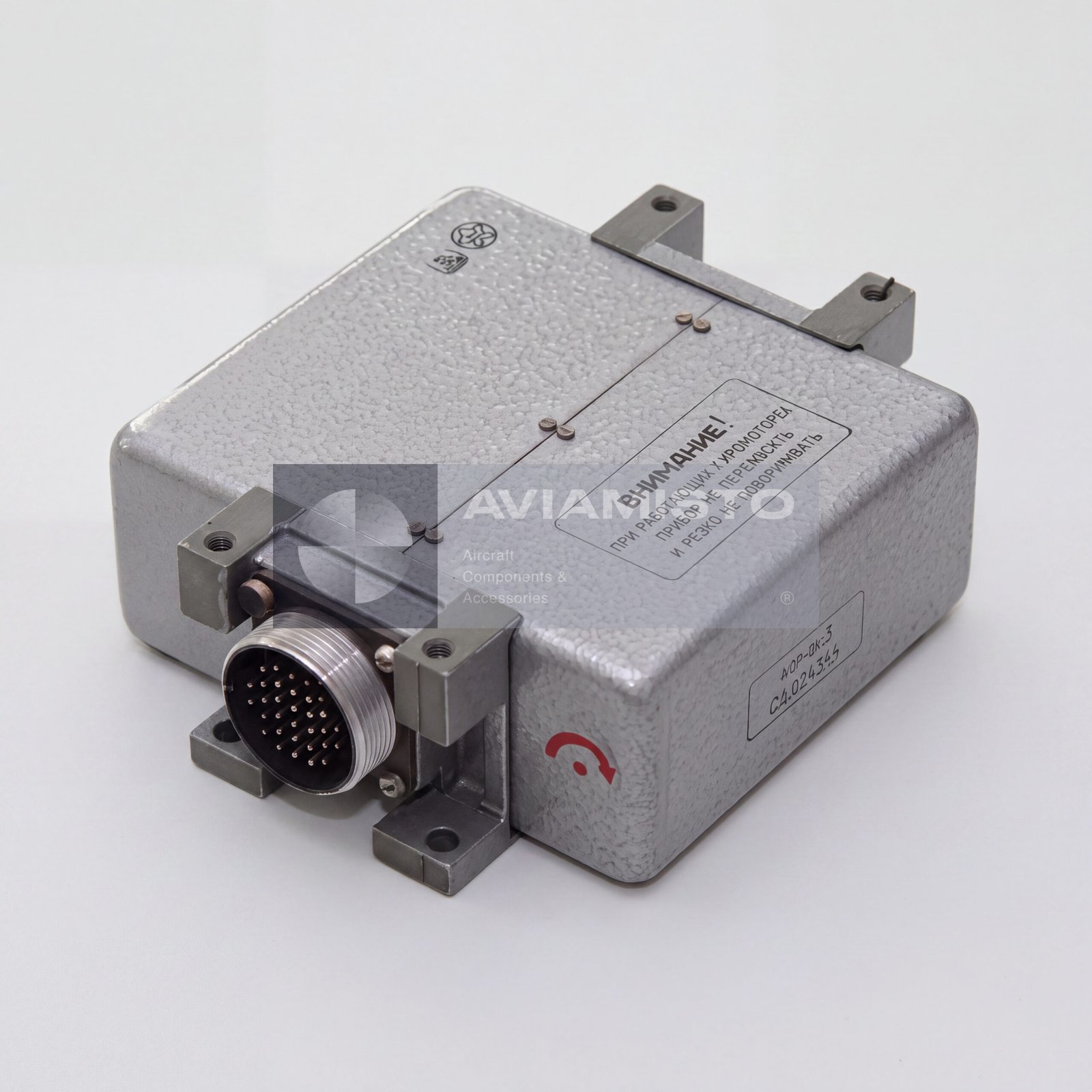
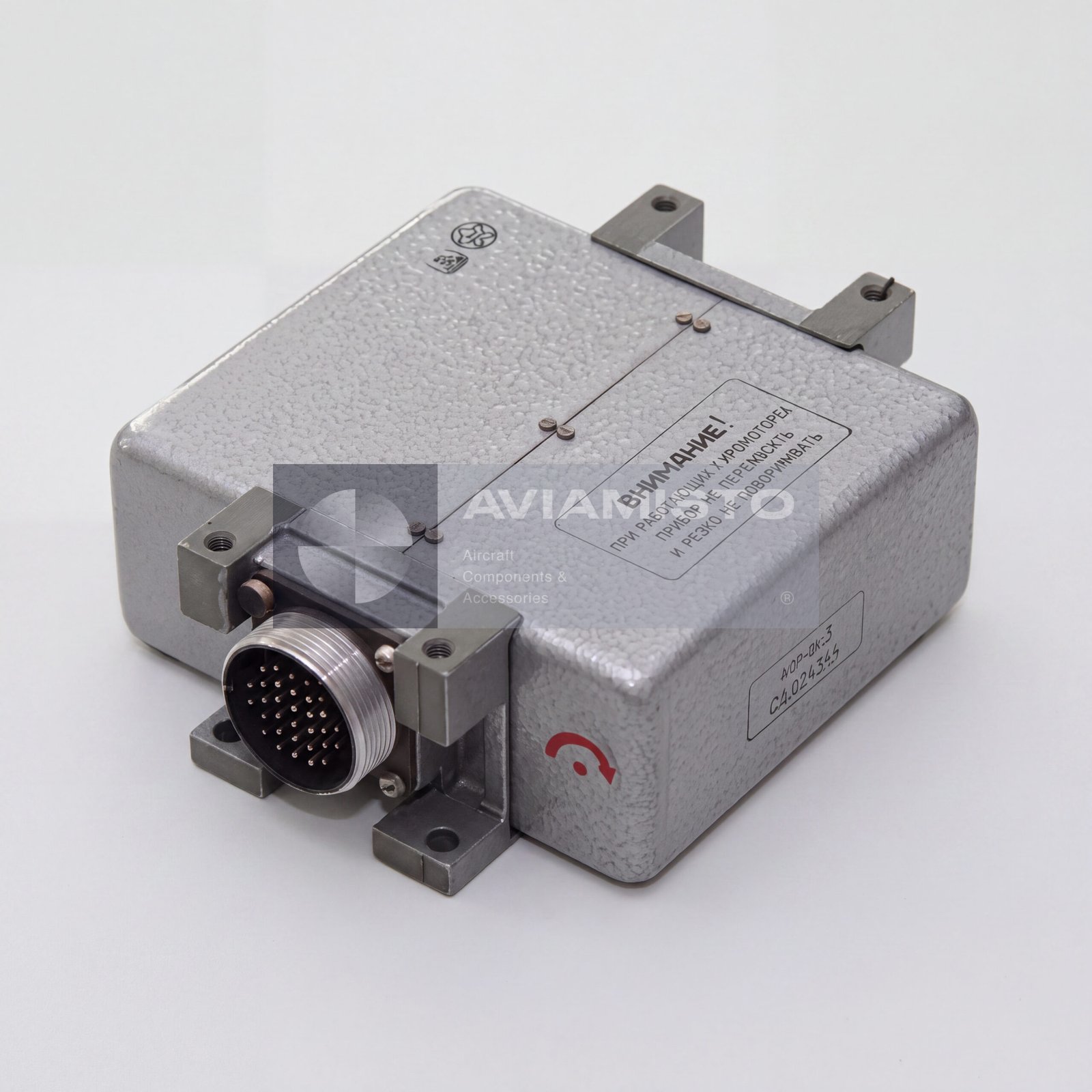


Description
BDG-25 Variant 7 damping gyroscope block
BDG-25 Variant 7 is an aircraft damping gyroscope block used to measure angular velocity of an aircraft around one selected coordinate axis. Depending on installation, the unit can operate in roll, heading / yaw or pitch channels. It generates an electrical signal proportional to angular rate and transmits it to automatic control systems, flight stabilization equipment or damping channels. The block is used where aircraft oscillations must be reduced and dynamic stability must be improved.
Full descriptionCollapse description
Function of the BDG-25 angular-rate sensor block
The main function of BDG-25 Variant 7 is to detect angular rate along the assigned axis and provide this data to the aircraft control system. The signal can be used by pitch, yaw or roll dampers and by automatic or electric flight-control systems. When the aircraft begins to rotate around the measured axis, the gyro element responds to this motion, and the block forms a proportional electrical output. This output helps the control system counter unwanted oscillations through the relevant control surfaces or actuators.
BDG-25 Variant 7 internal construction
BDG-25 Variant 7 is based on the unified angular-rate sensor DUSU-2. The DUSU-2 sensitive element detects angular movement of the object body. The gyroscopic moment deflects the internal frame, and this deflection is detected by an angle sensor. The converted electrical signal is then used by the onboard control system. According to the source context, the block also includes gyro motor rotation monitoring, which can issue a failure signal if rotor speed drops below the required level.
BDG-25 in automatic control systems
BDG-25 blocks are components of automatic flight-control systems and flight-navigation complexes. Since one BDG-25 block measures angular rate along only one axis, several blocks may be installed together to form a complete multi-axis damping system. In some installations, a more complex multi-channel block such as BDG-26 may be used instead. Correct orientation relative to the aircraft construction axes is required because the measurement axis is defined by the physical installation of the block.
Installation and aircraft application of BDG-25 Variant 7
The source context indicates that BDG-25 blocks are installed on mainline and heavy transport aircraft such as Il-86, Tu-134, Tu-154 and An-124 Ruslan, depending on aircraft configuration and system documentation. The unit is normally mounted rigidly on special avionics racks or frames inside technical compartments of radio-electronic equipment. Mounting must follow the aircraft maintenance manual because alignment errors can affect the angular-rate signal used by the control system.
Ordering and replacement of BDG-25 Variant 7
When ordering BDG-25 Variant 7, the buyer should specify the exact variant, aircraft type, measured channel and installed control system. Variant 7 belongs to the heavier group of BDG-25 modifications, together with variants 6, 8 and 9, and has its own weight and current-consumption parameters. Required condition, product passport, test report, repair certificate and storage records should be confirmed before supply. Interchangeability with other BDG-25 variants must be checked through system documentation.
Technical details
- Product Type
- Damping gyroscope block / aircraft angular-rate sensor block
- Designation
- BDG-25 Variant 7
- Alternative Designations
- BDG-25 var.7, BDG-25 version 7, БДГ-25 вариант 7, БДГ-25 вар.7
- Designation Meaning
- Damping Gyroscope Block / Блок демпфирующих гироскопов
- Function
- Measurement of angular velocity along one aircraft coordinate axis
All specificationsCollapse specifications
- Measured Axis
- Roll, heading / yaw or pitch depending on installation channel
- Angular Rate Measurement Range
- ±6°/s
- Signal Role
- Electrical angular-rate signal for damping and automatic control channels
- Application / Where Used
- Automatic flight-control systems, damping systems and flight-navigation complexes
- Compatible Aircraft / Equipment
- Il-86, Tu-134, Tu-154, An-124 and other aircraft depending on documentation
- Sensitive Element
- DUSU-2 unified angular-rate sensor
- Operating Principle
- Gyroscopic frame deflection converted into an electrical signal proportional to angular velocity
- Gyro Motor Rotation Monitoring
- Built-in monitoring circuit with failure signal if rotor speed drops below required level, according to source context
- Gyro Motor Power Supply
- 36 V AC
- Power Supply Frequency
- 400 Hz
- Potentiometer Power Supply
- 27 V ±7 V DC
- Consumed AC Current
- Not more than 0.7 A per phase, according to source context
- Readiness Time
- Not more than 1 second after power supply, according to source context
- Operating Temperature Range
- −60 °C to +60 °C
- Weight
- Not more than 1.85 kg
- Modification Group
- Variants 6, 7, 8 and 9 with increased current consumption and modified internal DUSU-2 construction, according to source context
- Mounting
- Rigid installation on avionics racks / frames aligned with aircraft construction axes
- Installation Area
- Technical avionics compartments or radio-electronic equipment bays depending on aircraft type
- Technical Documentation
- Product passport, repair certificate, test report, storage records and automatic control system documentation if available
Payment & delivery
Orders ship from our hub in Dubai. Partner stock is first transferred to Dubai, then shipped to you.
Dubai stock: 100% before dispatch. Partner stock (Remote stock) and Pre-order: 50% advance payment to start the order and 50% before shipment from Dubai to you.
Availability, lead time, delivery cost and payment terms are confirmed for your order before payment.
Payment & delivery terms