
BAP-1
Emergency Processing Unit
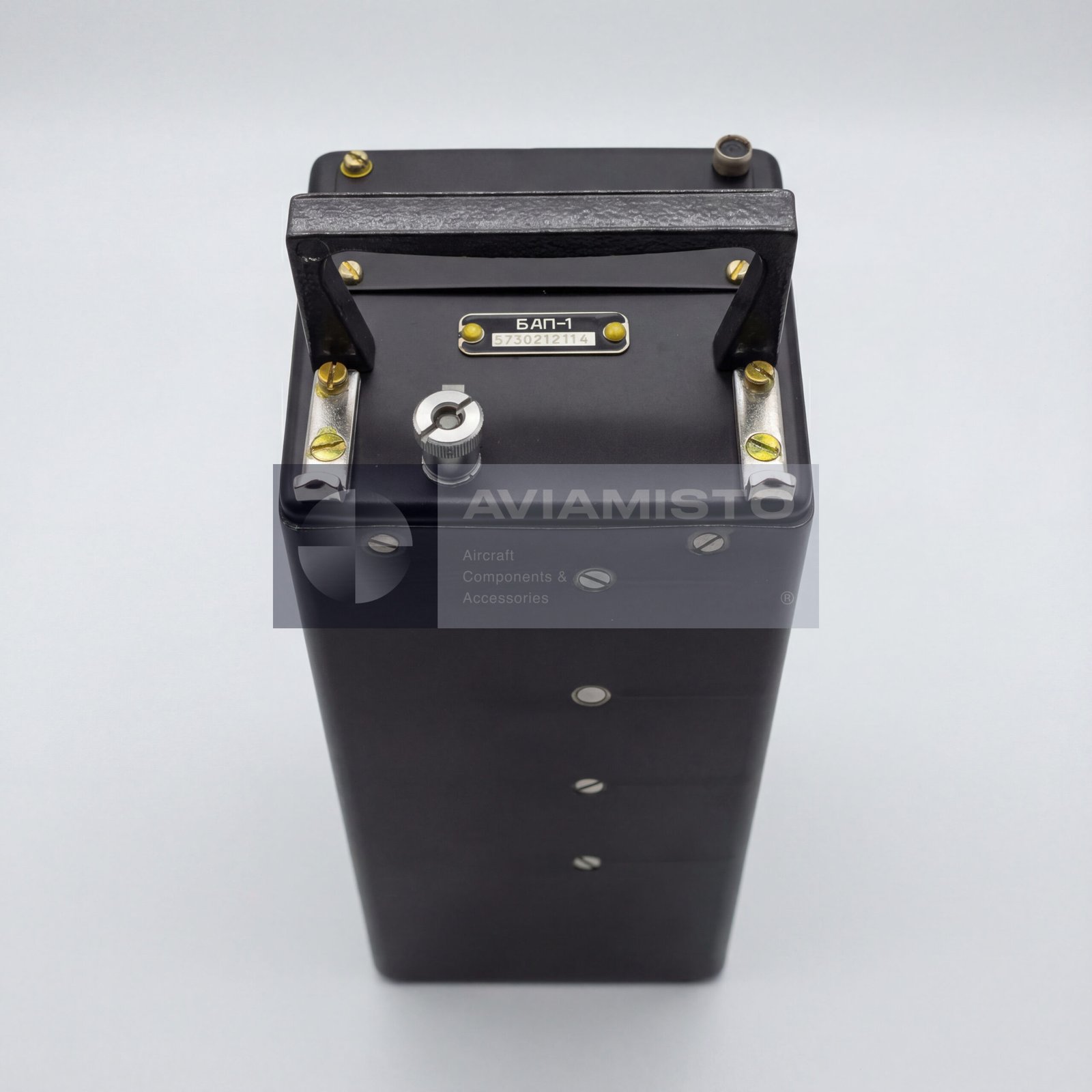



Description
BAP-1 in the SAS-4-9 warning system
The BAP-1 is an aircraft emergency and caution warning unit used as part of the SAS-4-9 crew alerting system. Its purpose is to receive signals from aircraft systems, process them by channels and output warning commands to cockpit indication and audio alerting elements. In practical operation, the unit helps the flight crew quickly identify failures, abnormal system states and conditions that require attention. It is installed on aircraft equipped with the SAS-4-9 annunciation system, including Yak-42, Il-86 and compatible platforms.
Full descriptionCollapse description
Emergency and caution signal processing by BAP-1
The BAP-1 works with discrete input signals received from aircraft relay circuits, sensors and monitored system contacts. Each connected channel is analyzed by the unit and then converted into a logic command for the warning system. This allows the aircraft to collect warning information from multiple systems in one processing unit instead of routing every signal directly to separate cockpit devices. With support for up to 30 independent input circuits, the BAP-1 provides wide monitoring coverage for onboard systems.
BAP-1 output to cockpit warning elements
After processing input signals, the BAP-1 sends commands to annunciator panels, the central warning light and other interface elements of the SAS-4-9 system. These outputs provide the crew with visual and audio alerts in the cockpit. The unit therefore acts as a link between aircraft system sensors and the pilot-facing warning interface. If the BAP-1 is faulty, the warning logic may become incomplete, delayed or unavailable, which can reduce the crew’s ability to react quickly to abnormal operating conditions.
Power supply and emergency operation of BAP-1
The BAP-1 is designed for operation from the aircraft 24–29.4 V DC power supply. It also remains functional under degraded electrical conditions down to 18 V, which is important during emergency power states or voltage drops in the onboard network. The unit is intended for continuous-duty operation as part of onboard avionics. Stable power supply, reliable connectors and proper grounding are important for correct channel processing and warning output. Power consumption is low, which suits the unit’s role as a constantly available monitoring component.
Installation and mounting of BAP-1
The BAP-1 is intended for built-in installation in the aircraft avionics or warning equipment area. Depending on configuration, the unit may be supplied with or without a mounting frame. This detail should be checked before procurement because the mounting frame can be part of the BAP-1 assembly in some supply configurations. When replacing the unit, technicians should confirm the version, connector layout, frame availability and compatibility with the existing SAS-4-9 installation. A correct mechanical fit is just as important as the electrical connection.
Application of BAP-1 on Yak-42 and Il-86 aircraft
The BAP-1 is used on aircraft fitted with the SAS-4-9 emergency and caution warning system, including Yak-42 and Il-86 aircraft. It may also be applicable to compatible platforms where the same warning system architecture is installed. Before replacement, the unit should be checked against the aircraft maintenance documentation, system wiring diagrams and consolidated passport of the SAS-4-9 system. Even visually similar warning units may differ by channel configuration, connector arrangement or approved installation version.
Precious and non-ferrous metal content of BAP-1
The BAP-1 contains precious and non-ferrous materials used in electrical contacts, internal circuit elements and structural parts. The supplied data lists gold, silver, palladium and aluminum content. This information is useful for inventory records, customs descriptions, disposal accounting, repair documentation and warehouse control. It should not be treated as a functional specification, but it is often important when handling aircraft electronic equipment in aviation supply chains.
Supply and documentation for BAP-1
For procurement, the full designation BAP-1 should be stated together with the required condition, documentation and frame requirement. The unit may be supplied as serviceable, from storage, repaired or in another agreed condition. For aircraft installation, documentation is essential: the passport 632.068.009 PS and the consolidated passport of the SAS-4-9 system confirm identification, acceptance, configuration and traceability. Before installation, the unit should be checked for connector condition, markings, frame availability, storage status and compatibility with the aircraft warning system.
Technical details
- Product Type
- Emergency and caution warning unit
- Designation
- BAP-1
- Alternative Designation
- BAP-1
- Function
- Processing and output of emergency and caution signals
- Application / Where Used
- Aircraft crew alerting and warning systems
All specificationsCollapse specifications
- System / Installation Area
- SAS-4-9 emergency / caution warning system
- Input Signal Type
- Discrete signals from relay circuits, sensors and monitored aircraft systems
- Number of Inputs
- Up to 30 discrete signals
- Output Function
- Logic commands to annunciator panels, central warning light and SAS-4-9 interface elements
- Power Supply, Nominal
- 24–29.4 V DC
- Operation on Emergency Power
- Down to 18 V
- Power Consumption
- Not more than 7 W at 27 V on one channel
- Operating Mode
- Continuous duty
- Installation
- Built-in installation; mounting frame depending on configuration / version
- Weight
- Not more than 2.75 kg
- Scope of Supply
- BAP-1 unit; mounting frame if available / included in assembly
- Metal Content
- Gold 0.767 g; silver 84.93 g; palladium 0.185 g; aluminum 0.7 kg
- Technical Documentation
- Passport 632.068.009 PS; consolidated passport of the SAS-4-9 system
Payment & delivery
Orders ship from our hub in Dubai. Partner stock is first transferred to Dubai, then shipped to you.
Dubai stock: 100% before dispatch. Partner stock (Remote stock) and Pre-order: 50% advance payment to start the order and 50% before shipment from Dubai to you.
Availability, lead time, delivery cost and payment terms are confirmed for your order before payment.
Payment & delivery terms