
Prima-KV
RADIO STATION


Description
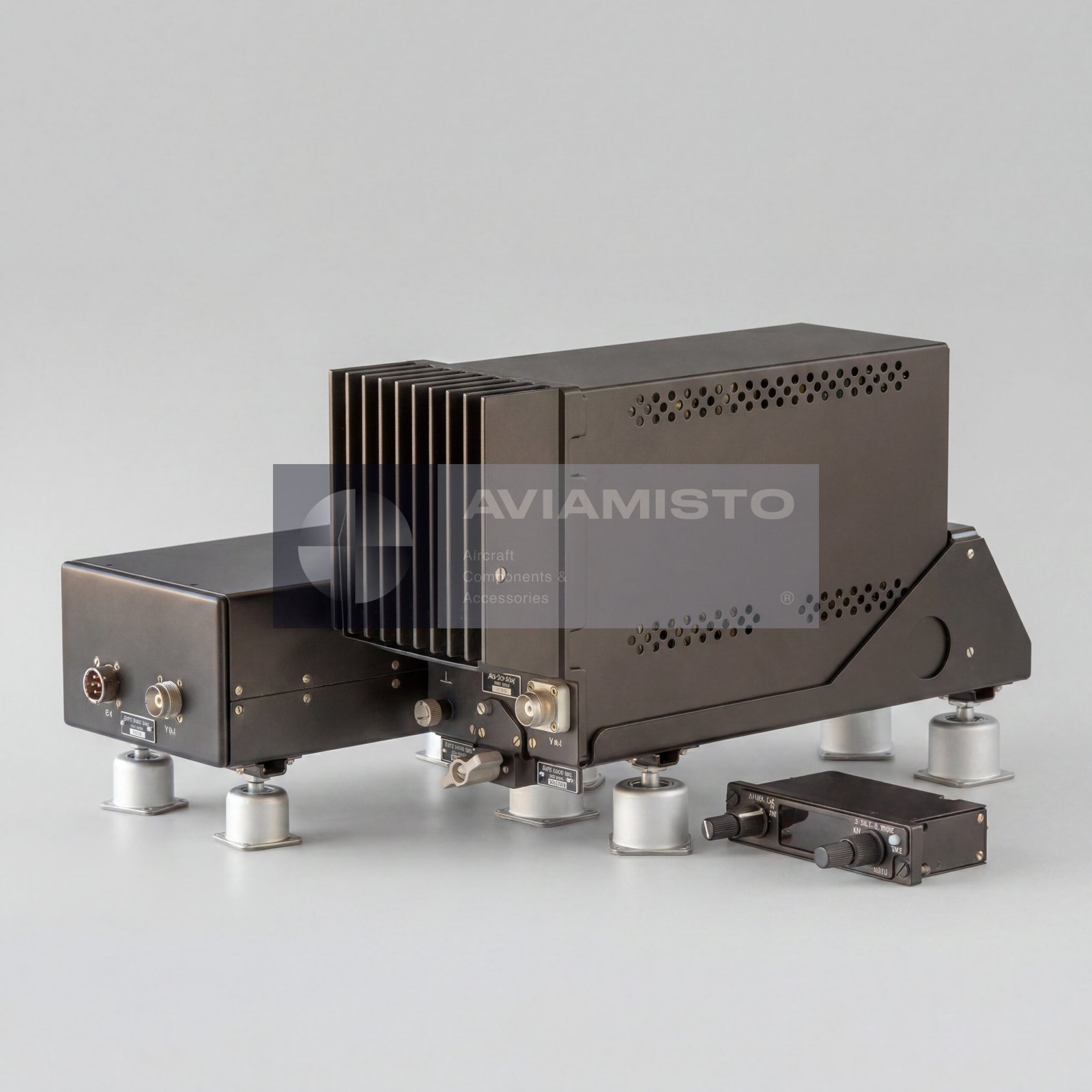
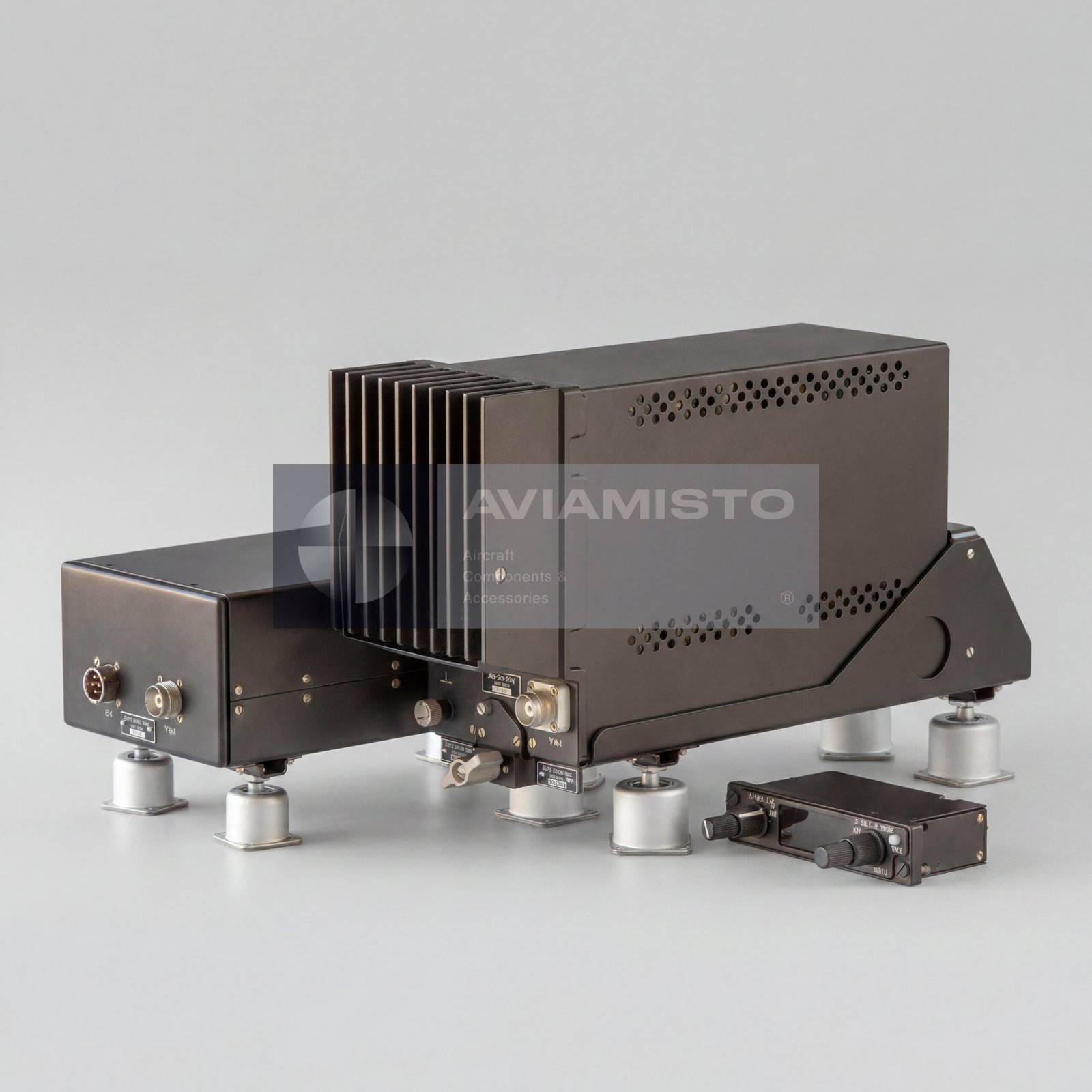
Prima-KV airborne HF radio station
Prima-KV is an airborne HF / decameter-band radio station designed for long-range communication between aircraft, helicopters, and ground control points. It is used where VHF communication is not enough because of distance, terrain, route profile, or remote operating areas. The station provides voice and telecode communication in the shortwave band and can be installed on both fixed-wing aircraft and helicopters. In practical aircraft operation, Prima-KV is used as the long-range communication channel for crews flying beyond stable line-of-sight radio coverage.
Full descriptionCollapse description
Long-range communication with Prima-KV
The main job of Prima-KV is to keep communication available over extended distances. This is especially important for helicopters and transport aircraft operating over large territories, low-density regions, offshore areas, mountains, or routes with limited ground radio infrastructure. The station works across the HF band and supports aircraft-to-ground and aircraft-to-aircraft communication. Depending on the selected version, Prima-KV can be used for standard voice exchange, telecode communication, data transmission, and adaptive communication functions. This makes the system suitable both for civil aircraft and special-purpose aviation.
Prima-KV frequency operation and channel memory
Prima-KV works in the 2.0000–29.9999 MHz frequency range with a 100 Hz frequency step. For crews and operators, this gives enough flexibility to work with assigned HF frequencies and prepared channels. The basic versions support programmable channel memory, which reduces cockpit workload: the crew can select stored frequencies rather than manually tuning the station each time. In the adaptive communication version, the number of stored channels is increased, and the station can support ALE operation for automatic link establishment. This is useful when communication conditions change and the radio channel must be selected more intelligently.
Prima-KV versions and adaptive communication
The Prima-KV family includes several versions. The basic configuration provides 100 W output power and standard HF radio operation. A civil aviation version is also available and is certified for civil use according to the official product brochure. The adaptive communication version adds SDR technology, ALE operation, serial modems, and data transmission modes similar to STANAG 4538, STANAG 4539, STANAG 4415 and MIL-STD-188-110B. This version is intended for more complex communication tasks, where voice is not the only requirement and automated channel selection or data exchange is needed.
Aircraft application of Prima-KV
Prima-KV can be installed on helicopters and aircraft as part of onboard radio communication equipment. The official documentation mentions installation and replacement documentation for Mi-8AMT / Mi-171E, Mi-8MTV-1 / Mi-17-1V, Mi-8T and Mi-26T applications. In modernization programs, Prima-KV may replace older HF radio stations such as Yadro-1 or Yadro-1G1, depending on aircraft type and approved documentation. Before supply or installation, the aircraft version, existing antenna system, mounting position, control panel arrangement, power supply and interface requirements must be checked.
Main blocks of the Prima-KV radio station
A complete Prima-KV installation is not limited to one transceiver. The system may include a B1-PrK transceiver unit, mounting frame, antenna matching unit, remote control panel and installation accessories depending on configuration. The antenna matching unit is especially important for HF operation, because the aircraft antenna must be matched to the selected frequency before efficient transmission is possible. If the station is ordered for replacement or modernization, it is better to clarify whether the requirement is for a complete radio station set or only for a specific block such as B1-PrK, B5A1-PrK or B7P1-PrK.
Integration and supply of Prima-KV
Prima-KV supports digital control and aircraft interface channels such as GOST 18977 / ARINC 429, RS-422 and RS-232, with additional Ethernet and CAN options in the adaptive communication version. This allows the station to be integrated into different avionics layouts, from simpler cockpit control to more complex communication systems. For procurement, the exact version must be specified: basic, civil aviation version, or adaptive communication version. Documentation, serial number, configuration, test status, completeness and aircraft compatibility should be confirmed before shipment.
Technical details
- Product Type
- Airborne HF / decameter-band radio station
- Designation
- Prima-KV
- Function
- Long-range voice, telecode and data communication between aircraft, helicopters and ground control points
- Application / Where Used
- Aircraft and helicopter radio communication systems
- System / Installation Area
- Onboard communication equipment, radio bay, avionics rack, cockpit control panel area
All specificationsCollapse specifications
- Compatible Aircraft / Equipment
- Mi-8AMT, Mi-171E, Mi-8MTV-1, Mi-17-1V, Mi-8T, Mi-26T and other aircraft depending on approved configuration
- Modernization Use
- Replacement of older HF radio stations such as Yadro-1 / Yadro-1G1 depending on aircraft documentation
- Frequency Range
- 2.0000–29.9999 MHz
- Frequency Step
- 100 Hz
- Frequency Stability
- 5 × 10⁻⁷
- Basic Output Power
- 100 W
- Adaptive Version Output Power
- 100 W or 200 W depending on configuration
- Emission Classes
- J3E, H3E / A3E, R3E, F1B, G1B, J7D, G7D depending on version
- Receiver Sensitivity
- 1 µV in J3E for basic and civil versions; 0.6 µV in J3E for adaptive version
- Programmable Channels
- 40 channels for basic / civil versions; 255 channels for adaptive version
- Transmit / Receive Duty Cycle
- 1:3 minutes for basic / civil versions; unrestricted transmit mode for adaptive communication version
- Data Rates
- F1B / G1B — 75, 150, 300, 500 bit/s; J7D — 1200, 2400 bit/s; G7D — 75 to 9600 bit/s depending on version
- Maximum Tuning Time
- 2 s; 0.1 s from memory
- Power Consumption in Receive / Transmit Mode
- 110 / 390 W for basic and civil versions
- Power Consumption in Adaptive Version
- 110 W receive; 550 / 390 W transmit for 200 / 100 W output power
- SELCAL Reception
- Available in civil aviation version
- ALE Mode
- ALE 2G / ALE 3G in adaptive communication version
- Control Interfaces
- GOST 18977 / ARINC 429 — 2 channels; RS-422 — 2 channels; RS-232 — 1 channel
- Additional Adaptive Version Interfaces
- Ethernet — 2 channels; CAN — 1 reserved channel
- Cooling
- Natural cooling
- Weight
- Not more than 11 kg for basic / civil versions; not more than 13 kg for adaptive communication version
- Operating Temperature Range
- −60 to +60 °C for basic and adaptive versions; −55 to +60 °C for civil aviation version
- Associated Blocks
- B1-PrK transceiver unit, PrK / B10A-PrK mounting frame, B5A1-PrK antenna matching unit, B7P1-PrK remote control panel depending on configuration
- Technical Documentation
- Product passport, installation documentation, operating documentation and aircraft modification documentation as applicable
Payment & delivery
Orders ship from our hub in Dubai. Partner stock is first transferred to Dubai, then shipped to you.
Dubai stock: 100% before dispatch. Partner stock (Remote stock) and Pre-order: 50% advance payment to start the order and 50% before shipment from Dubai to you.
Availability, lead time, delivery cost and payment terms are confirmed for your order before payment.
Payment & delivery terms