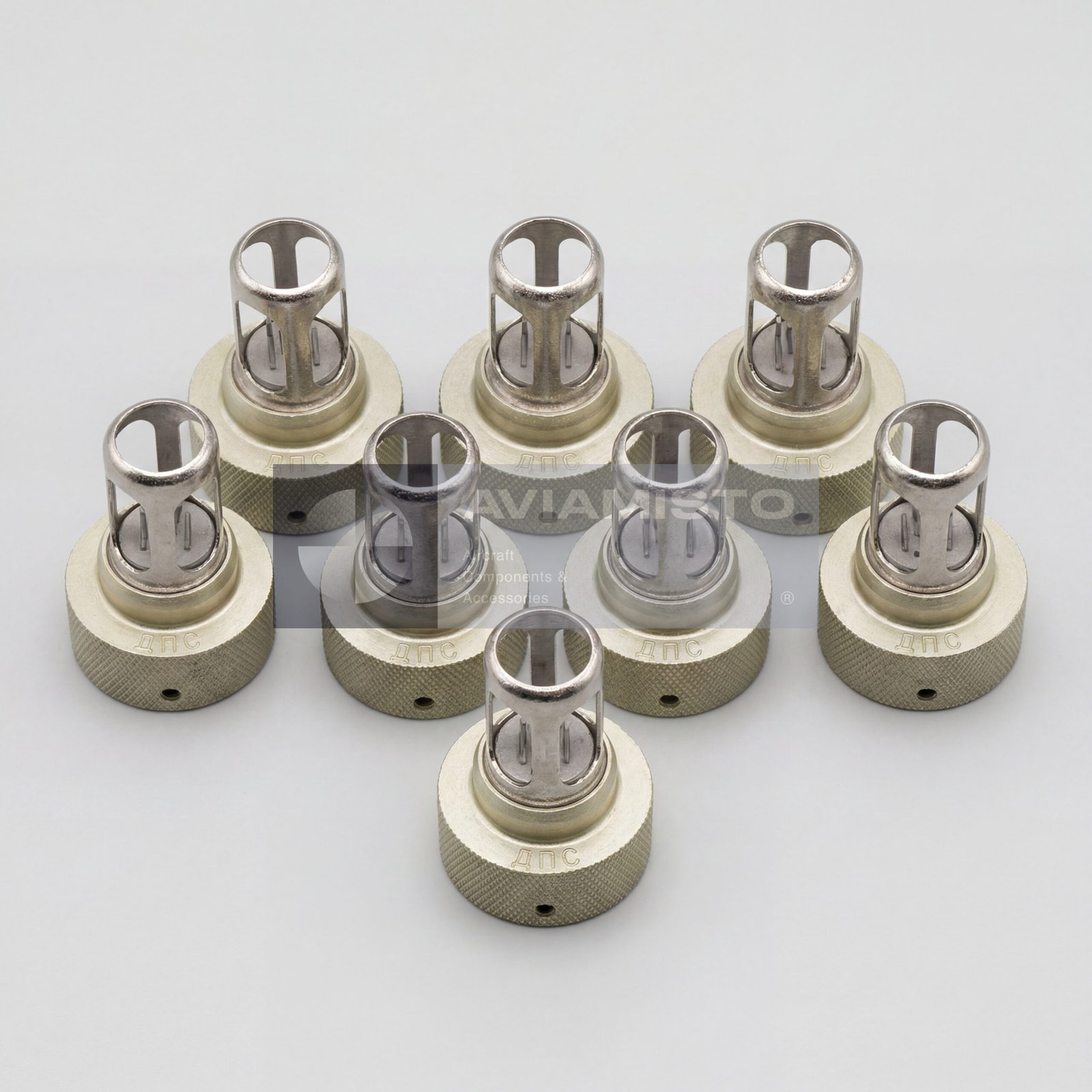
Differential Fire Detector
Price on request
Differential Fire Detector
Available on back-order
The DPS is a differential low-inertia fire detector used in aircraft fire warning systems such as SSP-FK and SSP-FK Series 2. It is installed in protected compartments where fire must be detected quickly: engine bays, gearbox areas, heater compartments and other zones defined by aircraft documentation. The detector does not work like a simple thermal fuse. It reacts to rapid thermal change and heat flow, which allows the system to identify a developing fire before the entire compartment reaches a uniform high temperature.
The DPS detector is based on a thermoelectric principle. Inside the unit there is a battery of thermocouples connected in series. Part of the thermocouple junctions is exposed to the surrounding hot airflow or flame, while the other part is shielded inside the body and reacts more slowly. When a fire starts, the exposed junctions heat up much faster than the protected junctions. This temperature difference creates thermoelectric voltage, which is sent to the SSP-FK-BI executive block for further processing.
The DPS itself does not switch cockpit lamps or release fire extinguishers. It generates a small electrical signal that is interpreted by the SSP-FK-BI Series 2 executive block. When the summed signal from the connected detector group exceeds the system threshold, the executive block issues the fire warning command and, depending on aircraft configuration, may also take part in the fire-extinguishing control chain. This separation is important during maintenance: the detector, wiring, socket, executive block and cockpit indication must all be checked as one system.
On aircraft such as Mi-8 family helicopters, DPS detectors are normally connected in groups rather than as isolated single sensors. A typical arrangement is series connection of several detectors in one channel, so that the executive block receives a combined signal from the protected zone. This helps reduce false triggering from a small local temperature disturbance and makes the system react to a more convincing fire condition. The exact grouping, number of detectors and protected zones are defined by the aircraft wiring diagram and fire-protection documentation.
The DPS detector is a very light aircraft unit, but its installation is critical. The sensing area is protected by a metal mesh or guard that allows hot air and flame to reach the exposed junctions while protecting the sensor from mechanical damage and debris. The detector is installed into a special socket, such as SSP-2I-RM type socket depending on the aircraft system. Poor contact, contamination, damaged mesh, incorrect positioning or loose installation can affect the signal and reduce the reliability of the fire warning system.
One DPS detector can protect a limited area of a compartment, but real aircraft installations normally use several detectors distributed around the protected zone. This is especially important in engine and gearbox compartments, where airflow direction, hot surfaces and possible fire sources are not uniform. The detector must be placed where it can react quickly to fire conditions, not merely where installation is convenient. For this reason, replacement and relocation must follow the aircraft maintenance manual, not only general detector specifications.
When ordering DPS detectors, the exact designation and system compatibility should be confirmed. It is important to specify whether the detector is required for the SSP-FK system, SSP-FK Series 2 installation, or another aircraft fire warning system. Completeness may include only the detector or may require sockets, connectors, mounting parts and documentation. Before installation, technicians normally check the passport, external condition, contact area, mesh protection, storage condition, compatibility with SSP-FK-BI, and compliance with the aircraft fire warning system layout.
Product Type: Differential low-inertia aircraft fire detector
Designation: DPS / ДПС
Function: Fire detection by rapid temperature rise and heat-flow response
Application / Where Used: Aircraft and helicopter fire warning systems
Parent System: SSP-FK / SSP-FK Series 2 fire warning system
Associated Executive Block: SSP-FK-BI Series 2
Typical Protected Zones: Engine compartments, main gearbox areas, heater compartments and other fire-risk zones depending on aircraft type
Typical Aircraft Application: Mi-8 family helicopters and other aircraft using SSP-FK-type fire warning systems
Operating Principle: Thermoelectric signal from a battery of series-connected thermocouples
Sensitive Elements: Open and protected thermocouple junctions with different thermal response rates
Output Signal: Thermo-EMF to the SSP-FK executive block
Typical Output Signal Level: Not less than 36–40 mV during rapid transfer to approximately +300 °C environment
Protected Area per Detector: Up to 15 m², depending on installation scheme and aircraft documentation
Connection Logic: Sensors grouped in aircraft fire-warning channels
Typical Grouping: Series connection of 3 detectors per group / channel on Mi-8-type installations, depending on wiring scheme
Mounting Interface: Bayonet or threaded contact connection depending on execution
Associated Socket: SSP-2I-RM type socket or approved equivalent depending on aircraft configuration
Mechanical Protection: Metal mesh / protective guard against damage and debris
Weight: Approximately 26–27 g
Technical Documentation: Product passport, SSP-FK system documentation and aircraft maintenance documentation as applicable
All shipments are carried out from our international warehouse in Dubai (UAE), as well as from our partners’ remote warehouses.
In Stock — items available in stock at the Dubai warehouse are dispatched within 5–10 business days after receiving 100% prepayment.
Remote Stock — items available at our partners’ remote warehouses are supplied within an average of 30–45 business days after receiving 100% prepayment.
Pre-Order — made-to-order products are manufactured and delivered within an average of 45–60 business days. Payment terms: 50% advance payment to start production, with the remaining 50% paid before dispatch from the Dubai warehouse after full readiness for shipment.
Returns & Changes (Restocking Fee)
For selected items, a RESTOCKING FEE of 10% may apply in case of return, order cancellation, or changes to the order specifications. This condition applies only to certain products and is confirmed at the order approval stage.
Warranty
All products are covered by a standard 6-month warranty.
Extended warranty is available upon request and is agreed individually; it may affect the final product price.
The DPS is a differential low-inertia fire detector used in aircraft fire warning systems such as SSP-FK and SSP-FK Series 2. It is installed in protected compartments where fire must be detected quickly: engine bays, gearbox areas, heater compartments and other zones defined by aircraft documentation. The detector does not work like a simple thermal fuse. It reacts to rapid thermal change and heat flow, which allows the system to identify a developing fire before the entire compartment reaches a uniform high temperature.
The DPS detector is based on a thermoelectric principle. Inside the unit there is a battery of thermocouples connected in series. Part of the thermocouple junctions is exposed to the surrounding hot airflow or flame, while the other part is shielded inside the body and reacts more slowly. When a fire starts, the exposed junctions heat up much faster than the protected junctions. This temperature difference creates thermoelectric voltage, which is sent to the SSP-FK-BI executive block for further processing.
The DPS itself does not switch cockpit lamps or release fire extinguishers. It generates a small electrical signal that is interpreted by the SSP-FK-BI Series 2 executive block. When the summed signal from the connected detector group exceeds the system threshold, the executive block issues the fire warning command and, depending on aircraft configuration, may also take part in the fire-extinguishing control chain. This separation is important during maintenance: the detector, wiring, socket, executive block and cockpit indication must all be checked as one system.
On aircraft such as Mi-8 family helicopters, DPS detectors are normally connected in groups rather than as isolated single sensors. A typical arrangement is series connection of several detectors in one channel, so that the executive block receives a combined signal from the protected zone. This helps reduce false triggering from a small local temperature disturbance and makes the system react to a more convincing fire condition. The exact grouping, number of detectors and protected zones are defined by the aircraft wiring diagram and fire-protection documentation.
The DPS detector is a very light aircraft unit, but its installation is critical. The sensing area is protected by a metal mesh or guard that allows hot air and flame to reach the exposed junctions while protecting the sensor from mechanical damage and debris. The detector is installed into a special socket, such as SSP-2I-RM type socket depending on the aircraft system. Poor contact, contamination, damaged mesh, incorrect positioning or loose installation can affect the signal and reduce the reliability of the fire warning system.
One DPS detector can protect a limited area of a compartment, but real aircraft installations normally use several detectors distributed around the protected zone. This is especially important in engine and gearbox compartments, where airflow direction, hot surfaces and possible fire sources are not uniform. The detector must be placed where it can react quickly to fire conditions, not merely where installation is convenient. For this reason, replacement and relocation must follow the aircraft maintenance manual, not only general detector specifications.
When ordering DPS detectors, the exact designation and system compatibility should be confirmed. It is important to specify whether the detector is required for the SSP-FK system, SSP-FK Series 2 installation, or another aircraft fire warning system. Completeness may include only the detector or may require sockets, connectors, mounting parts and documentation. Before installation, technicians normally check the passport, external condition, contact area, mesh protection, storage condition, compatibility with SSP-FK-BI, and compliance with the aircraft fire warning system layout.
Product Type: Differential low-inertia aircraft fire detector
Designation: DPS / ДПС
Function: Fire detection by rapid temperature rise and heat-flow response
Application / Where Used: Aircraft and helicopter fire warning systems
Parent System: SSP-FK / SSP-FK Series 2 fire warning system
Associated Executive Block: SSP-FK-BI Series 2
Typical Protected Zones: Engine compartments, main gearbox areas, heater compartments and other fire-risk zones depending on aircraft type
Typical Aircraft Application: Mi-8 family helicopters and other aircraft using SSP-FK-type fire warning systems
Operating Principle: Thermoelectric signal from a battery of series-connected thermocouples
Sensitive Elements: Open and protected thermocouple junctions with different thermal response rates
Output Signal: Thermo-EMF to the SSP-FK executive block
Typical Output Signal Level: Not less than 36–40 mV during rapid transfer to approximately +300 °C environment
Protected Area per Detector: Up to 15 m², depending on installation scheme and aircraft documentation
Connection Logic: Sensors grouped in aircraft fire-warning channels
Typical Grouping: Series connection of 3 detectors per group / channel on Mi-8-type installations, depending on wiring scheme
Mounting Interface: Bayonet or threaded contact connection depending on execution
Associated Socket: SSP-2I-RM type socket or approved equivalent depending on aircraft configuration
Mechanical Protection: Metal mesh / protective guard against damage and debris
Weight: Approximately 26–27 g
Technical Documentation: Product passport, SSP-FK system documentation and aircraft maintenance documentation as applicable
All shipments are carried out from our international warehouse in Dubai (UAE), as well as from our partners’ remote warehouses.
In Stock — items available in stock at the Dubai warehouse are dispatched within 5–10 business days after receiving 100% prepayment.
Remote Stock — items available at our partners’ remote warehouses are supplied within an average of 30–45 business days after receiving 100% prepayment.
Pre-Order — made-to-order products are manufactured and delivered within an average of 45–60 business days. Payment terms: 50% advance payment to start production, with the remaining 50% paid before dispatch from the Dubai warehouse after full readiness for shipment.
Returns & Changes (Restocking Fee)
For selected items, a RESTOCKING FEE of 10% may apply in case of return, order cancellation, or changes to the order specifications. This condition applies only to certain products and is confirmed at the order approval stage.
Warranty
All products are covered by a standard 6-month warranty.
Extended warranty is available upon request and is agreed individually; it may affect the final product price.