
BE-9E
processing module
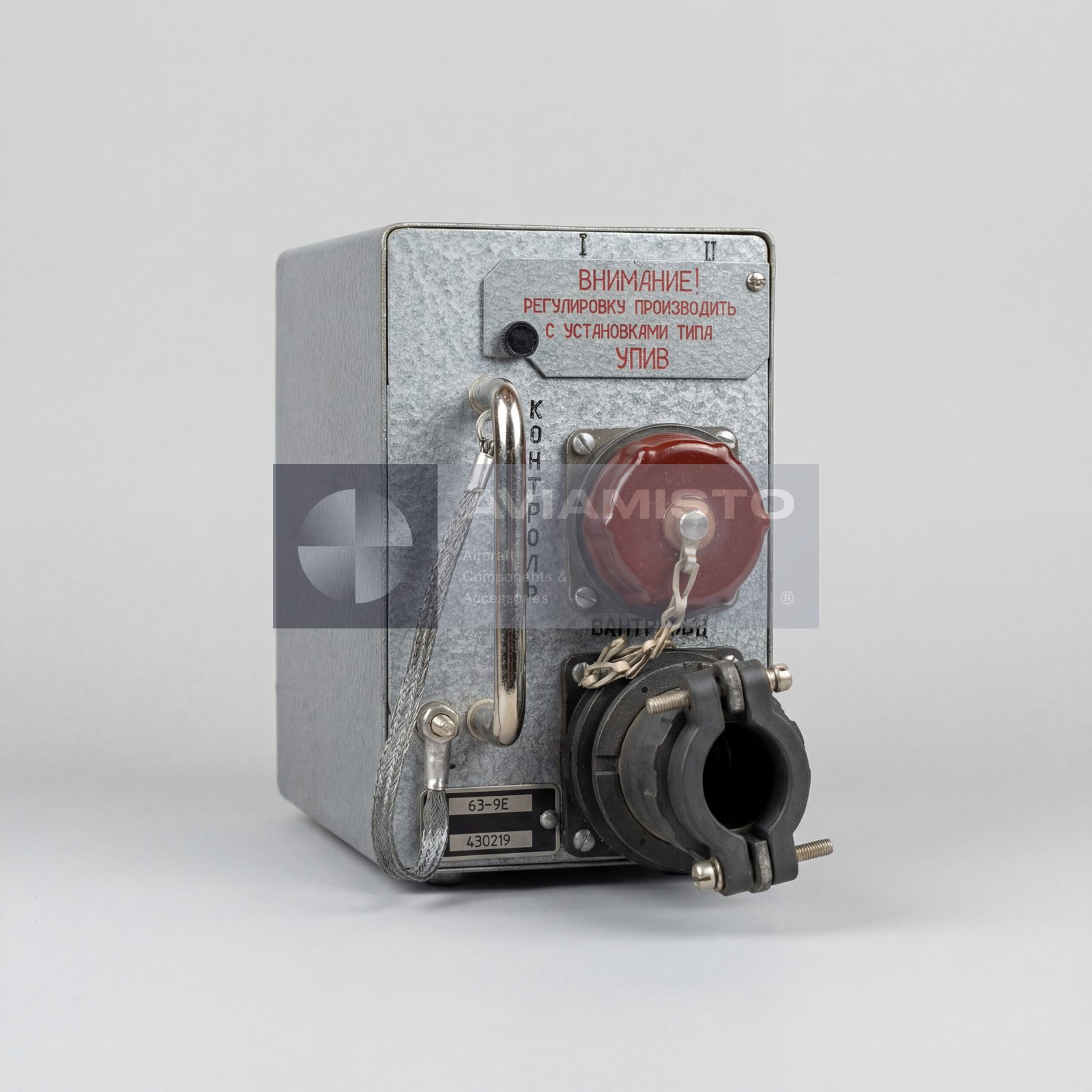


Description
Electronic unit BE-9E in IV-500E equipment
BE-9E is an electronic processing unit used in the IV-500E engine vibration monitoring system. It is the baseline version of the block, without the later Series 2 marking. The unit receives vibration signals from MV-03 or MV-03-1 sensors mounted on the engines and processes them for cockpit warning output. It does not measure vibration mechanically. Its work starts after the sensor and USS-6 matching unit have already formed the electrical signal.
Full descriptionCollapse description
Vibration warning logic through BE-9E
During operation, BE-9E compares the incoming vibration signal with the system warning thresholds. If vibration reaches the caution level, the unit activates yellow cockpit annunciation. If the level reaches the hazardous range, the red warning signal is triggered. Depending on the aircraft wiring, this output may also be connected to engine protection or warning logic. The block therefore acts as the decision element in the IV-500E chain: sensor signal in, warning signal out.
BE-9E with MV-03 and USS-6 units
In the IV-500E system, BE-9E works together with MV-03 / MV-03-1 piezoelectric vibration sensors and USS-6 matching units. The sensors are installed on the engine casing, the USS-6 units condition the sensor signals, and BE-9E performs the comparison and output switching. The typical signal path is MV-03 or MV-03-1 → USS-6 → BE-9E → cockpit annunciators. A fault in the warning system may come from any part of this chain, not only from the electronic unit.
Aircraft application of BE-9E
BE-9E is used on Mi-8 / Mi-17 family helicopters and other aircraft with TV3-117 engine installations where IV-500E vibration monitoring equipment is fitted. The system supports continuous monitoring during ground operation and flight. It helps detect vibration patterns related to rotor imbalance, shaft alignment problems, bearing wear and other dynamic engine faults. Exact installation depends on the aircraft version, installed sensors, cockpit annunciation panel and wiring layout.
Identification and ordering of BE-9E
Before ordering BE-9E, the unit marking should be checked against the IV-500E passport, aircraft wiring diagram and equipment list. This is important because BE-9E and BE-9E Series 2 may appear in similar system contexts but are not always interchangeable without checking the documentation. For correct selection, provide the aircraft type, engine type, installed IV-500E configuration and a photo of the unit data plate. The product is also known under alternative designations BE-9E, BE9E, БЭ-9Е, БЭ9Е and 6Л2.009.005.
Technical details
- Product Type
- Electronic vibration processing module
- Function
- Vibration signal processing and warning logic
- Application / Where Used
- Engine vibration monitoring and cockpit warning systems
- System / Installation Area
- IV-500E vibration monitoring equipment
- Compatible Aircraft / Equipment
- Mi-8, Mi-17, Mi-171 and other aircraft with TV3-117 engines and IV-500E equipment
All specificationsCollapse specifications
- Signal Inputs
- MV-03 / MV-03-1 sensors via USS-6 matching units
- Outputs
- Yellow caution and red hazard annunciation signals
- Signal Path
- MV-03 / MV-03-1 → USS-6 → BE-9E → cockpit annunciators
- Caution Trigger Level
- Approx. 45 mm/s, system standard
- Hazard Trigger Level
- Approx. 60 mm/s, system standard
- Built-In Test Compatibility
- Via IV-500E test pushbutton
- Power Supply
- 115 V AC, 400 Hz
- Installation
- Avionics bay or cargo cabin mounts
- Alternative Designations
- BE-9E, BE9E, БЭ-9Е, БЭ9Е, 6Л2.009.005
- Technical Documentation
- Passport supplied upon request
Payment & delivery
Orders ship from our hub in Dubai. Partner stock is first transferred to Dubai, then shipped to you.
Dubai stock: 100% before dispatch. Partner stock (Remote stock) and Pre-order: 50% advance payment to start the order and 50% before shipment from Dubai to you.
Availability, lead time, delivery cost and payment terms are confirmed for your order before payment.
Payment & delivery terms