
MKCh-62TV Series 2
Electromechanism
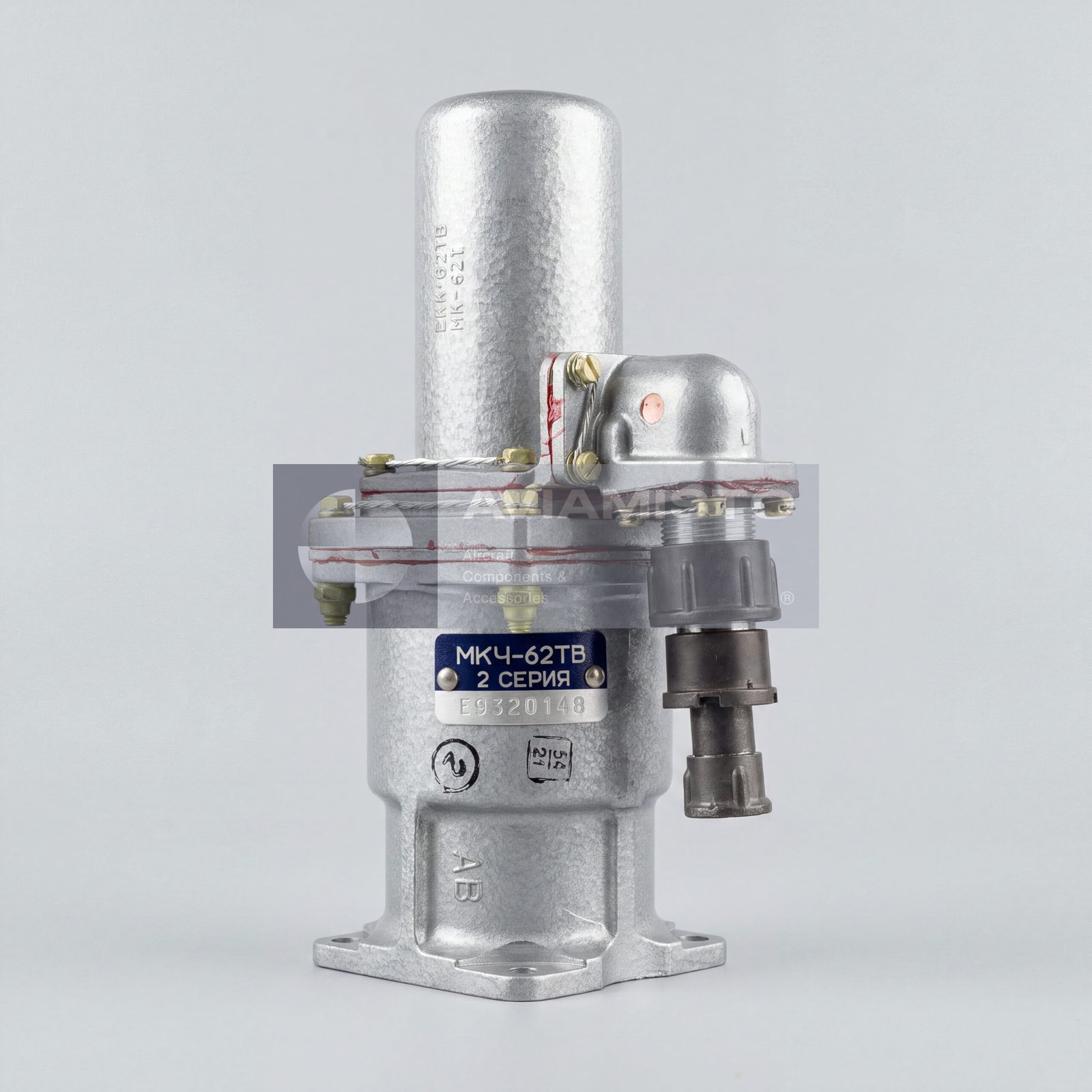
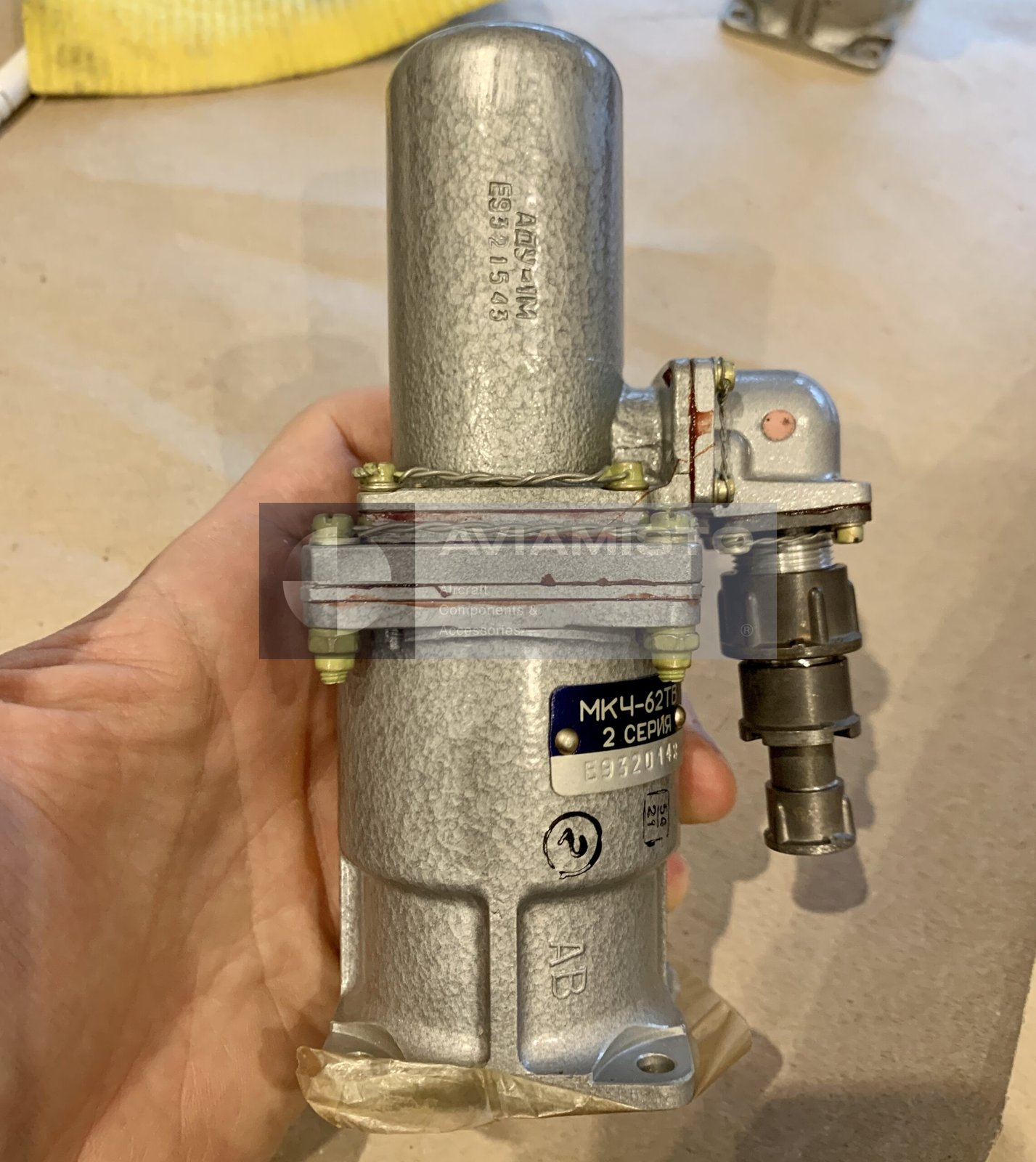
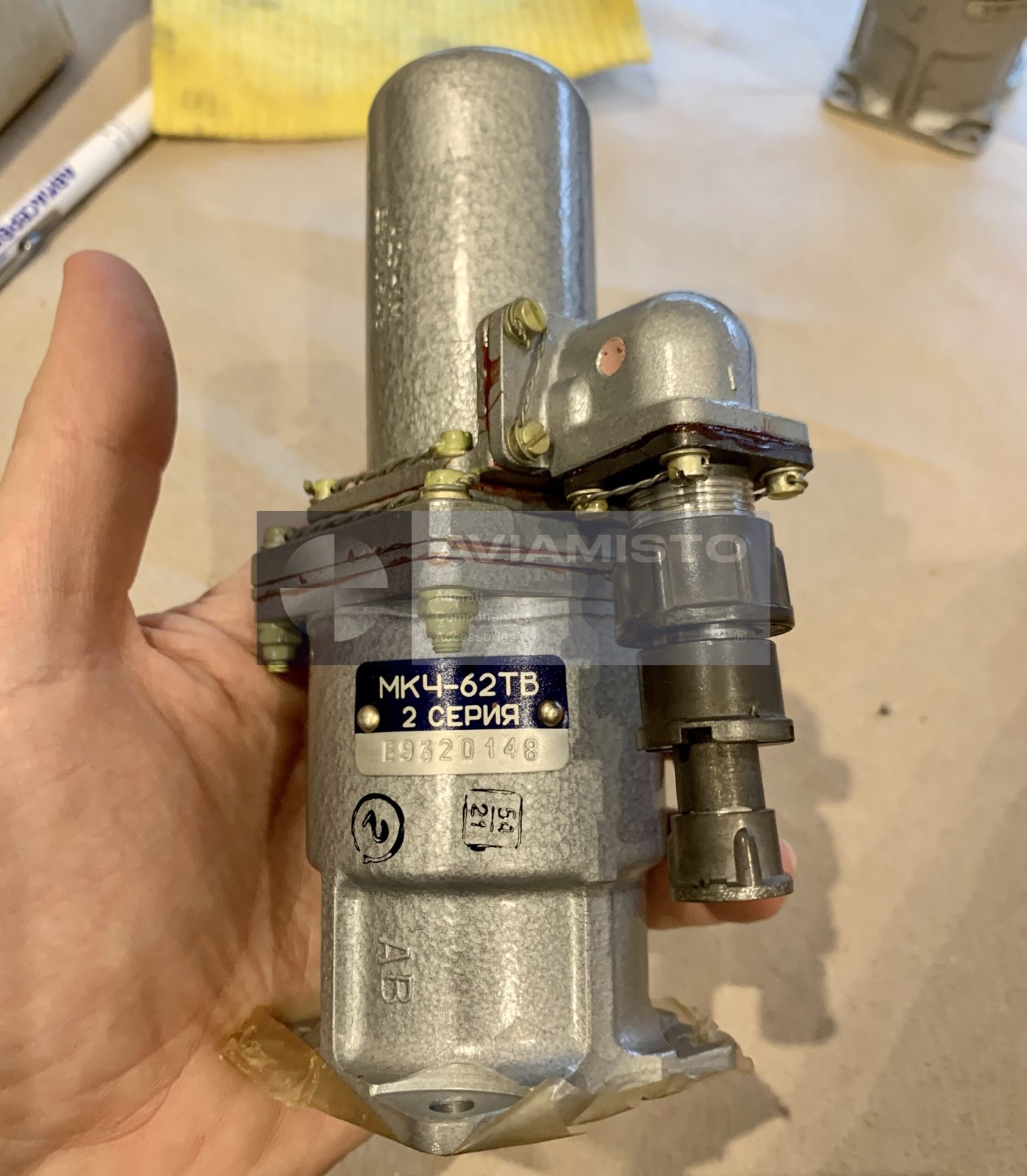
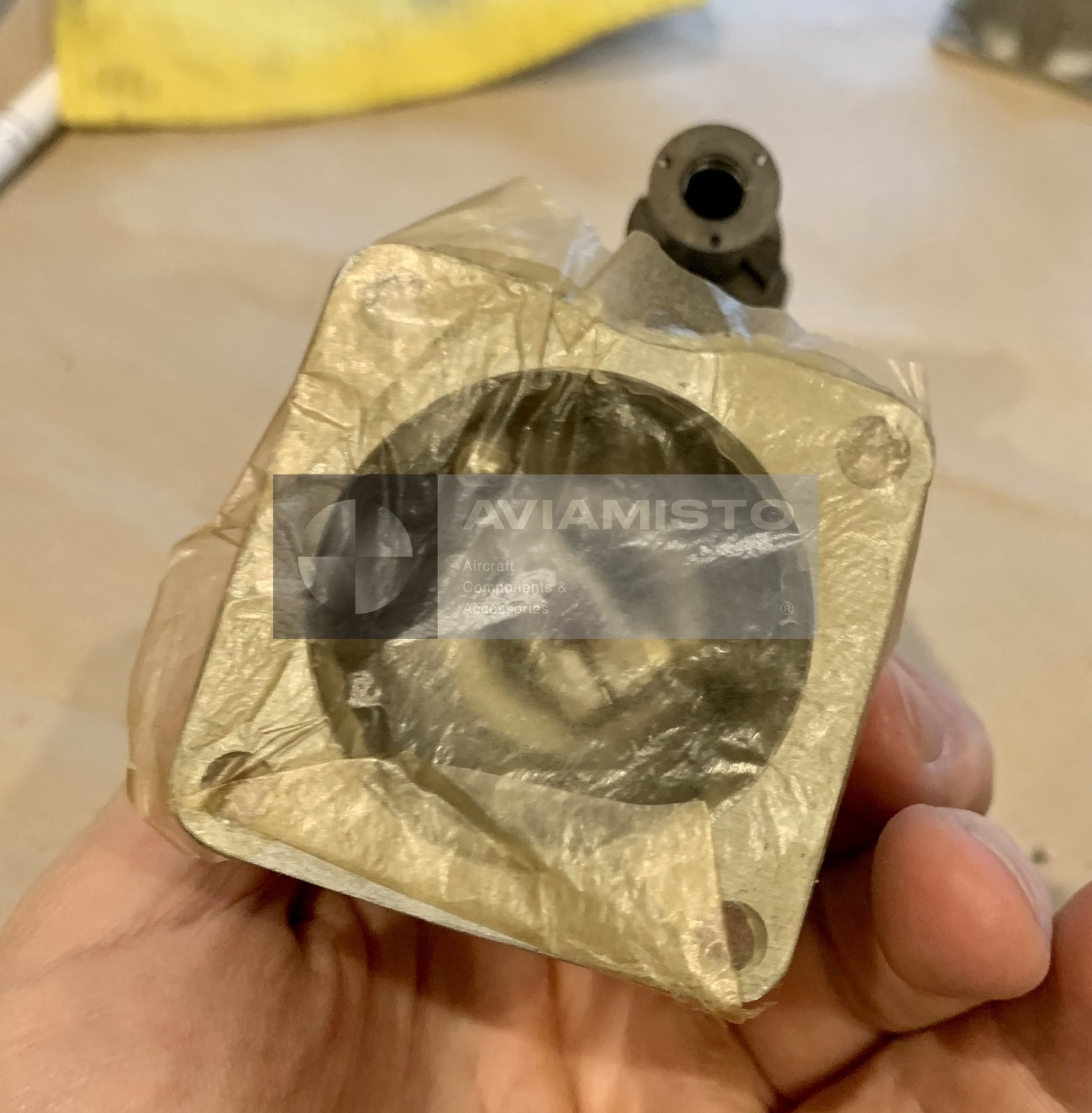


Description
MKCh-62TV Series 2 in aircraft frequency regulation systems
The MKCh-62TV Series 2 is an aircraft electromechanism used as a frequency correction actuator in onboard AC power generation systems. It works in the generator frequency regulation channel and converts an electrical control signal into mechanical movement of the output shaft. In practical terms, the unit helps correct generator drive speed so that the aircraft AC network can maintain the required frequency. It is normally used together with frequency regulation equipment such as BRCh-series blocks and the constant-speed drive system of the generator.
Full descriptionCollapse description
Frequency correction function of the MKCh-62TV Series 2
The MKCh-62TV Series 2 receives a control signal from the frequency regulation circuit and mechanically acts on the generator drive correction mechanism. If generator frequency begins to move away from the required value, the regulating system sends a signal to the electromechanism. The output shaft then moves in the required direction and changes the setting of the drive control system. This correction helps return the generator speed, and therefore the output frequency, to the normal operating range. The unit does not generate power itself; it adjusts the mechanical side of the generator control chain.
MKCh-62TV Series 2 with BRCh frequency regulation units
In aircraft systems, the MKCh-62TV Series 2 usually works with frequency regulation blocks such as BRCh-62BM. The BRCh block detects frequency deviation and forms the control signal, while the MKCh electromechanism performs the mechanical correction. This is why a frequency regulation fault should not be assigned to one unit without checking the complete circuit. A problem may come from the BRCh block, the MKCh electromechanism, wiring, capacitors, the constant-speed drive, generator load conditions or mechanical linkage. Proper troubleshooting must cover both the electrical and mechanical parts of the regulation channel.
Oscillating reversible operation of MKCh-62TV Series 2
The MKCh-62TV Series 2 is a reversible oscillating electromechanism. Its output shaft can operate in both directions, allowing the frequency control system to increase or reduce the drive correction setting as required. The operating mode is short-time repeated, not continuous rotation for long periods. The passport data describes a duty cycle with short operation in one direction, a brief pause, and then operation in the opposite direction. This type of duty is suitable for correction movements where the mechanism makes small adjustments during flight rather than acting as a continuously running motor.
Electrical data of the MKCh-62TV Series 2
The unit uses AC supply for the excitation and control windings. The passport data lists nominal AC supply at 400 Hz, with the excitation winding connected to a 115 V source in the specified circuit and the control winding supplied at 60 V. When the excitation winding is connected through a capacitor, the voltage on the excitation winding is listed as a reference value. The current consumption of the excitation and control windings is low, which is typical for a signal-driven actuator used in generator regulation rather than for a power drive.
Mechanical output of the MKCh-62TV Series 2
The mechanical output parameters of the MKCh-62TV Series 2 are important for correct operation of the generator drive correction system. The unit provides a specified torque at the output shaft and a low shaft rotation speed under counteracting load. It is designed for precise corrective movement, not for fast actuation. The passport also specifies starting voltage and permissible angular backlash of the output shaft under alternating load. Excessive backlash, poor movement, weak torque or unstable response can affect frequency correction even when the electrical control signal is present.
Installation, inspection and condition of MKCh-62TV Series 2
Before installation, the MKCh-62TV Series 2 should be checked for shaft movement, backlash, connector condition, housing integrity, markings and signs of storage damage. Since the unit is an electromechanical actuator, mechanical condition matters as much as electrical continuity. A motor winding may test normally while the output mechanism still has excessive play, sticking, contamination or weak torque. For aircraft use, it is advisable to confirm the passport, serial number, production year, test record or storage documentation before installation in a generator frequency regulation channel.
Related equipment: BRCH-62BM, BRN-208M7B, BZU-376SP-4S. These links are grouped by function and system context and do not indicate interchangeability.
Technical details
- Product Type
- Aircraft frequency correction electromechanism
- Designation
- MKCh-62TV Series 2
- Function
- Mechanical correction of generator drive speed for AC frequency regulation
- Application / Where Used
- Aircraft AC power generation and frequency regulation systems
- System / Installation Area
- Generator frequency control channel; constant-speed drive correction circuit
All specificationsCollapse specifications
- Associated Frequency Regulation Unit
- BRCh-62BM and related BRCh-series blocks depending on aircraft system
- Operating Principle
- Reversible oscillating electromechanism with electrical control input and mechanical output shaft
- Nominal AC Supply Frequency
- 400 Hz
- Nominal AC Supply Voltage
- 115/200 V for excitation winding source; 60 V for control winding according to passport data
- Excitation Winding Voltage with Capacitor Connection
- 200–260 V for reference
- Capacitor in Excitation Circuit
- 0.3–0.35 µF according to passport note
- Current Consumption, Excitation Winding
- Not more than 0.22 A
- Current Consumption, Control Winding
- Not more than 0.23 A
- Output Shaft Torque, Nominal
- 19.6 N·cm / 2 kgf·cm
- Output Shaft Torque, Maximum
- 58.8 N·cm / 6 kgf·cm
- Output Shaft Speed at Counteracting Torque, Nominal
- Not less than 3.5 rpm
- Output Shaft Speed at Counteracting Torque, Maximum
- Not less than 3 rpm
- Starting Voltage at Output Shaft
- Not more than 7 V under specified conditions
- Permissible Angular Backlash
- Not more than 3° under specified alternating load
- Operating Mode
- Repeated short-time operation
- Duty Cycle
- 3 s operation in one direction, 0.1 s pause, 3 s operation in the opposite direction, 0.1 s pause
- Permissible Operation Frequency
- Up to 80 switching cycles per one hour of flight, 40 cycles in each direction
- Weight
- Not more than 1 kg
- Passport Reference
- 004278 PS
- Precious / Non-Ferrous Materials
- Gold 0.051 g; silver 0.16 g; aluminum 0.22 kg; copper 0.02 kg
- Technical Documentation
- Product passport, bench-test documentation and aircraft electrical system maintenance documentation as applicable
Payment & delivery
Orders ship from our hub in Dubai. Partner stock is first transferred to Dubai, then shipped to you.
Dubai stock: 100% before dispatch. Partner stock (Remote stock) and Pre-order: 50% advance payment to start the order and 50% before shipment from Dubai to you.
Availability, lead time, delivery cost and payment terms are confirmed for your order before payment.
In-person viewing of parts held in stock at our Dubai warehouse can be arranged on request.
Payment & delivery terms