
DUS-1209K
gyro sensor
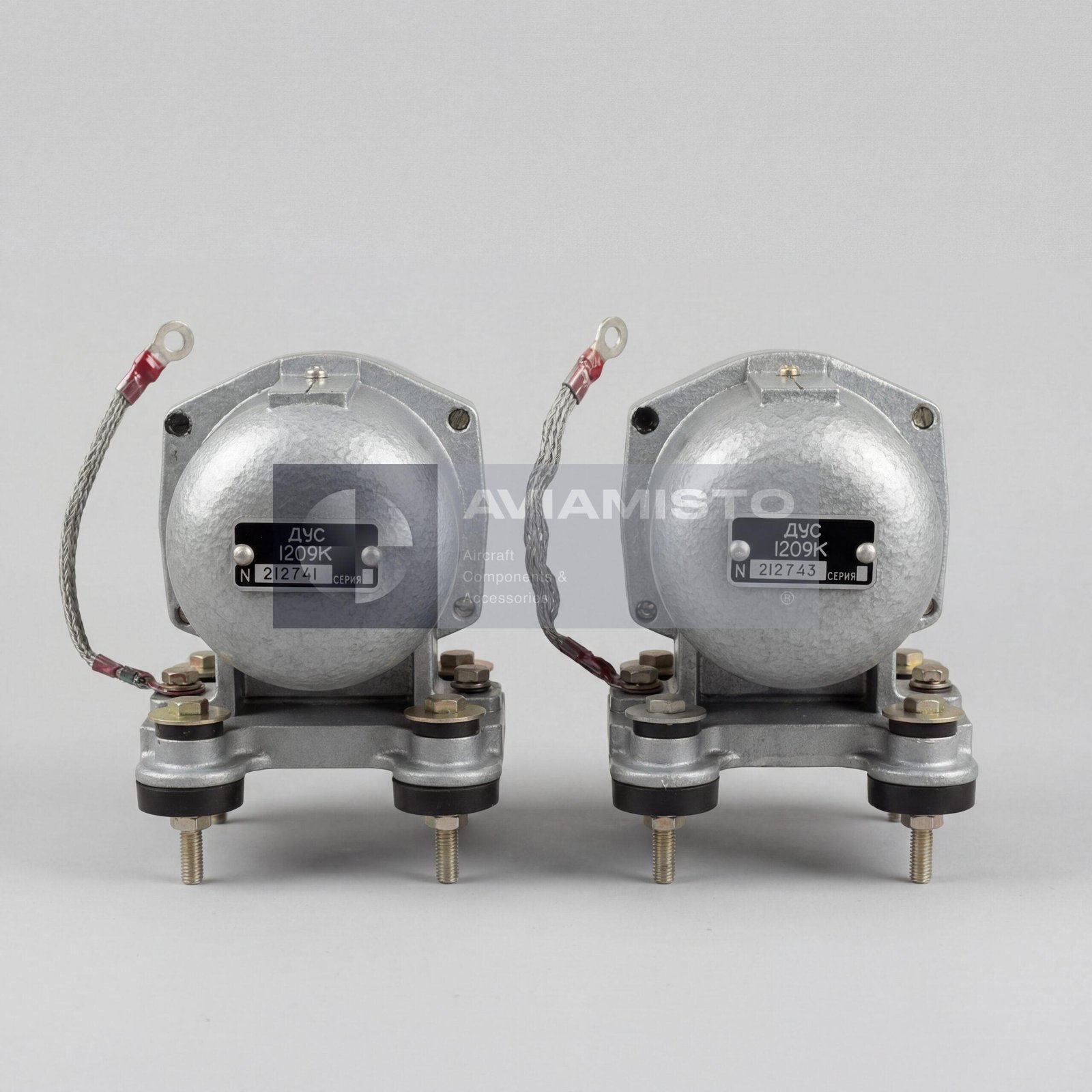


Description
DUS-1209K yaw-rate sensor in the AP-34B system
The DUS-1209K is an aircraft yaw-rate gyro sensor used in the AP-34B automatic flight control system on Mi-8 and Mi-17 family helicopters. It measures angular velocity around the yaw axis and converts heading-rate movement into an electrical signal for the autopilot. This signal is used in the directional stabilization channel, where the system needs to know how quickly the helicopter is turning or drifting in yaw. The sensor is not an actuator and does not move the controls itself. It supplies the feedback that allows the autopilot to form a proper corrective response.
Full descriptionCollapse description
Directional stabilization with the DUS-1209K
Yaw disturbances can appear during turns, hover, side wind, power changes, pedal inputs or transition between flight modes. The DUS-1209K gives the AP-34B system a continuous signal showing the rate of heading change. With that information, the autopilot can damp unwanted yaw movement and support smoother directional behavior. This is useful not only in cruise, but also during hover, climb, descent and coordinated maneuvering, where yaw stability affects handling, workload and the general feeling of helicopter control.
DUS-1209K in the yaw control channel
The DUS-1209K works inside the yaw or directional channel of the AP-34B autopilot. Its output is processed by the connected control and amplifier units, then used as part of the automatic correction chain. A correct yaw-rate signal helps the system separate intentional maneuvering from unwanted oscillation or drift. If the signal is missing, noisy or outside limits, the yaw channel may become unstable, respond incorrectly or fail system checks. For this reason, the sensor is normally evaluated together with the complete directional stabilization channel.
Electrical output of the DUS-1209K sensor
The DUS-1209K operates from the helicopter AC power supply and produces a small electrical output that changes with yaw angular rate. In neutral condition, the residual output must remain within the specified limit. When angular rate is applied, the output should correspond to the defined values at the test points. These figures are important during bench testing and troubleshooting. A unit may have no visible damage but still be unfit for installation if the residual signal, sensitivity or output range does not match the passport requirements.
Use of DUS-1209K on Mi-8 / Mi-17 helicopters
The DUS-1209K is used on Mi-8, Mi-8T, Mi-8MT, Mi-8AMT, Mi-8MTV-1, Mi-17 and related helicopter variants equipped with the AP-34B system. It is specifically assigned to the yaw channel. This distinction matters because AP-34B equipment also uses other DUS-1209 sensors for pitch and roll channels. The units may look similar, but they are selected by suffix letter, channel assignment, installation position and aircraft documentation. Before replacement, the marking and passport should be checked against the installed autopilot configuration.
Inspection and service condition of DUS-1209K
During maintenance, the DUS-1209K should be checked for secure mounting, housing condition, connector condition, wiring, corrosion, mechanical damage and signs of previous repair. Since the unit is a gyro sensor, functional checks are more important than appearance alone. The sensor must receive the correct power supply and produce the required output under defined yaw-rate input. This is especially important for units from storage or after repair, where external condition may look acceptable but the internal gyro or output circuit may not meet the required values.
Identification and supply of DUS-1209K
The sensor may appear in documents and stock lists as DUS-1209K, DUS1209K, DUS-1209-K, DUS-1209K or DUS1209K. These designations usually refer to the same yaw-rate sensor, but the exact version and condition should still be confirmed by the nameplate and manufacturer passport. The DUS-1209K is aviation technical equipment and may be supplied new, from storage, repaired, overhauled or serviceable depending on availability. For installation on aircraft, passport, service records and test confirmation are normally requested.
Technical details
- Product Type
- Yaw-rate gyro sensor
- Designation
- DUS-1209K
- Alternative Designation
- DUS-1209K
- Alternative Designations
- DUS1209K; DUS-1209-K; DUS1209K
- Function
- Conversion of yaw angular velocity into an electrical feedback signal
All specificationsCollapse specifications
- Application / Where Used
- AP-34B automatic flight control system, yaw / directional stabilization channel
- System / Installation Area
- Automatic flight control equipment of Mi-8 / Mi-17 family helicopters
- Compatible Aircraft / Equipment
- Mi-8, Mi-8T, Mi-8MT, Mi-8AMT, Mi-8MTV-1, Mi-17 and related variants depending on AP-34B installation
- System Role
- Yaw-rate feedback for directional stabilization, damping of yaw oscillations and coordinated control
- Associated Equipment
- AP-34B autopilot, channel amplifiers, control units and downstream executive circuits
- Power Supply
- 36–40.5 V AC, 400 ±8 Hz
- Power Consumption
- Not more than 0.1 A
- Residual Output Voltage
- Not more than 300 mV
- Output Voltage Range
- Not more than 500 mV with yaw input
- Output Signal at ±5°/s
- 8.3 ±1.6 mV
- Output Signal at ±12°/s
- 20 ±3 mV
- Mounting
- Avionics bay / autopilot equipment installation, depending on helicopter layout
- Weight
- Not more than 1.0 kg
- Category
- Aviation technical equipment / autopilot gyro sensor
- Precious Metals Content
- Gold and silver according to manufacturer passport
- Technical Documentation
- Manufacturer passport included when available
Payment & delivery
Orders ship from our hub in Dubai. Partner stock is first transferred to Dubai, then shipped to you.
Dubai stock: 100% before dispatch. Partner stock (Remote stock) and Pre-order: 50% advance payment to start the order and 50% before shipment from Dubai to you.
Availability, lead time, delivery cost and payment terms are confirmed for your order before payment.
In-person viewing of parts held in stock at our Dubai warehouse can be arranged on request.
Payment & delivery terms