Login by Email
Enter the code from Email
Mode Selector
Price on request
Mode Selector
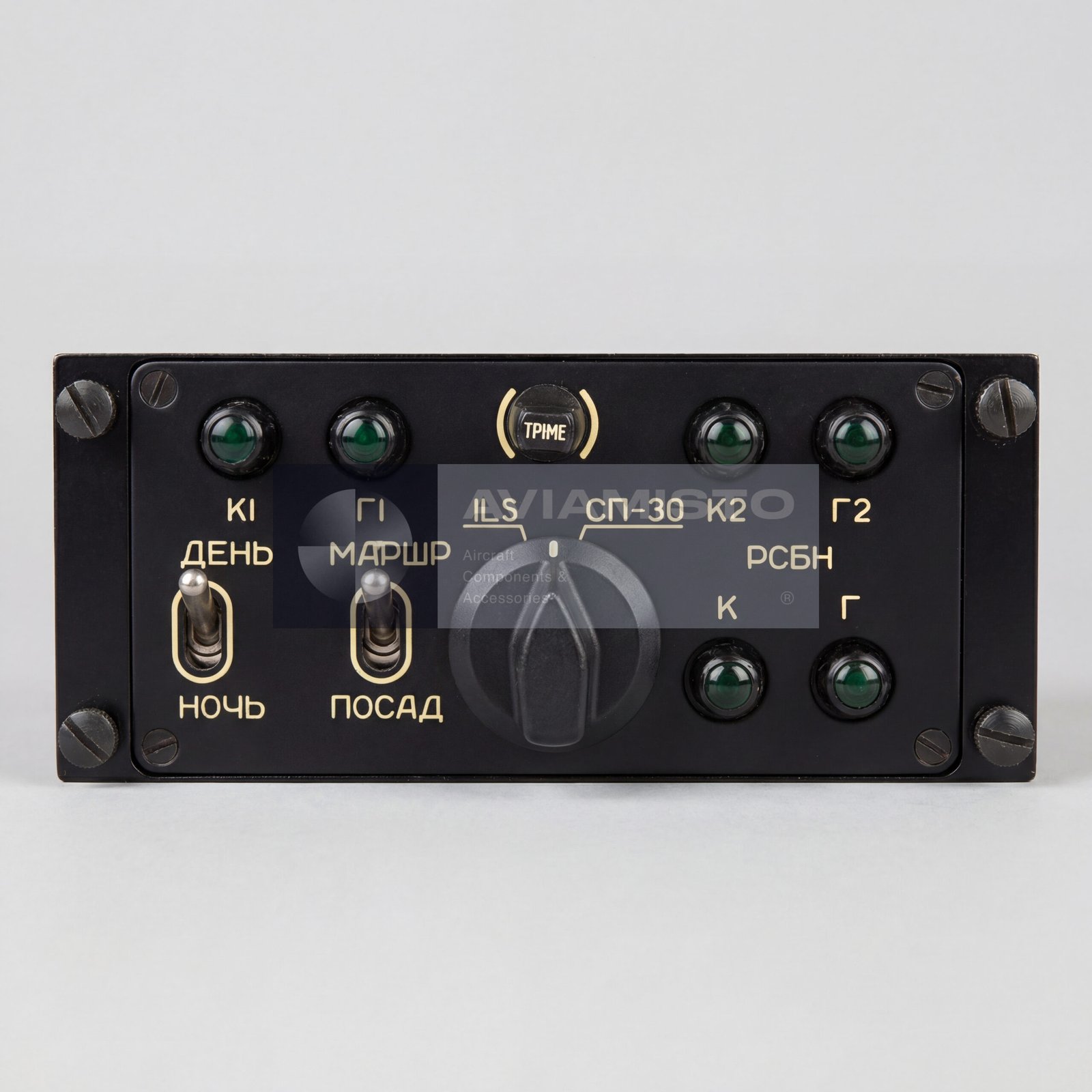
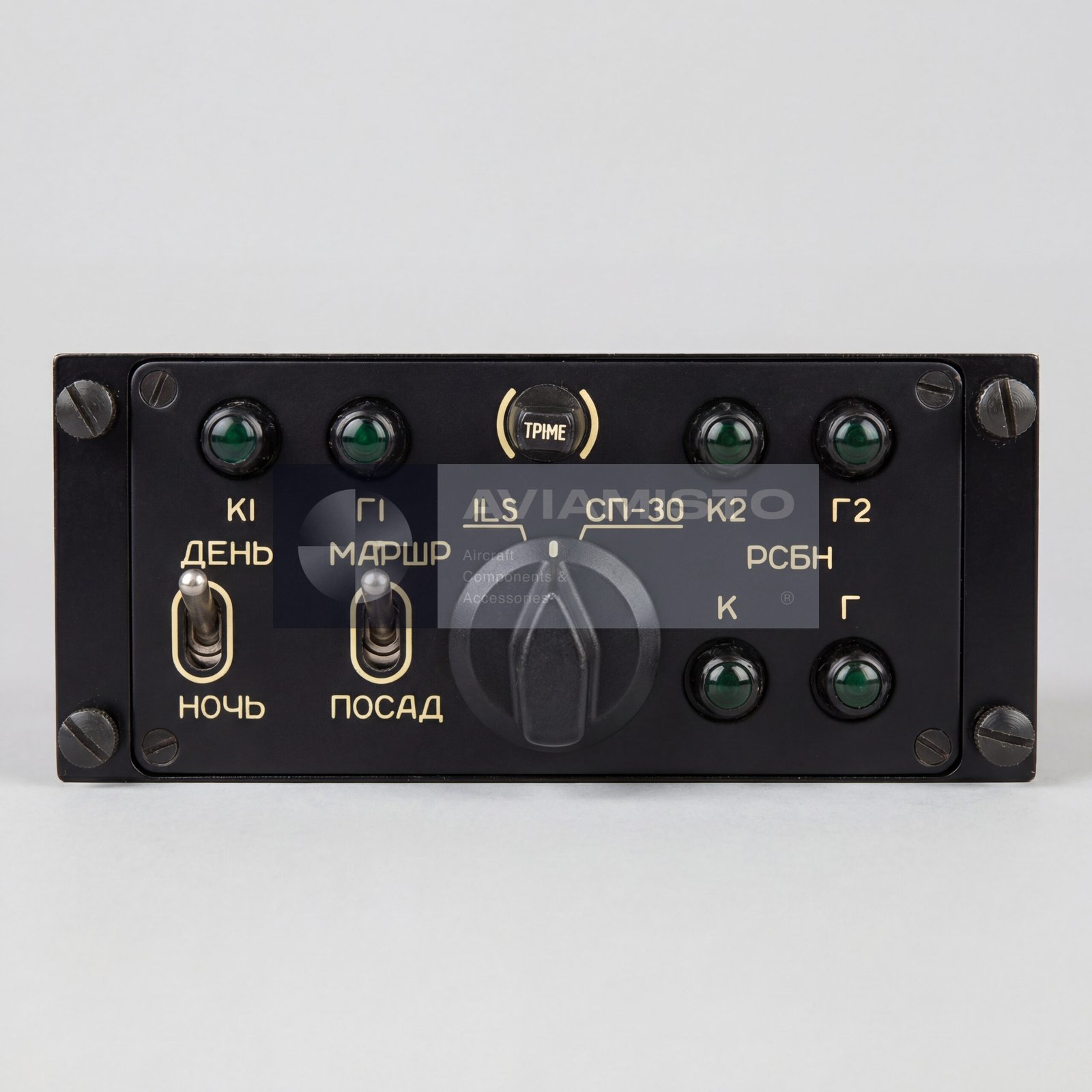
The 2.216.217-02 is a cockpit mode selector used with the Kurs MP-70 navigation and landing radio set. It is not a receiver, indicator, or signal-processing block. The unit gives the crew a physical control point for selecting the operating mode of the MP-70 equipment. In the aircraft documentation, this selector is normally listed together with the MP-70 receiver units, cockpit indicators, control wiring, and autopilot coupling circuits. Its role is simple but specific: it changes how the navigation and landing set is commanded from the cockpit.
During operation, the selector changes the active logic of the Kurs MP-70 system according to the flight phase and the selected radio navigation source. Depending on the aircraft configuration, it may be used for VOR route navigation, localizer approach, full ILS landing mode, or built-in test. The selector does not calculate bearing, glide path, or deviation data. It sends switching commands through the aircraft control circuits, and the connected MP-70 blocks then work in the selected mode.
The 2.216.217-02 selector works in the control chain of the MP-70 system. Around it are the receiver blocks, VOR/ILS channels, cockpit indicators, annunciation lamps, test circuits, and autopilot interface lines where these are installed. On older aircraft, part of the switching logic may be relay-based. On modified aircraft, the wiring may differ from the original factory configuration. For this reason, replacement should not be based only on the aircraft type. The part number, connector layout, and wiring diagram should be checked before installation.
The selector is used on aircraft equipped with the Kurs MP-70 family of navigation and landing equipment. The MP-70 system is known from Soviet-built transport aircraft, airliners, and some helicopter installations, including Tu-154, Il-62, Il-76, Il-86, Yak-42, An-24, An-26, An-30, An-32, An-124, and Mi-8MT / Mi-17 configurations. The same system name does not mean the same cockpit layout on every aircraft. Indicator sets, antenna routing, autopilot coupling, and control panel design can change by aircraft type, production batch, or overhaul standard.
A selector removed from one aircraft may look suitable but still require checking before use on another aircraft. This is common with fleets that have passed through several repairs, partial upgrades, or equipment substitutions. Some panels keep the original MP-70 arrangement. Others have changed wiring, replaced indicators, or modified autopilot links. The selector should therefore be matched against the aircraft parts catalog, maintenance manual, and installed wiring. For a non-standard aircraft, a photo of the data plate and cockpit panel helps avoid the wrong supply.
Before ordering, the marking on the unit should be compared with the aircraft logbook, parts catalog, or repair documentation. If the aircraft has a mixed equipment history, the installed part is often more useful than a general aircraft model reference. A request should include the part number, aircraft type, and, if possible, a photo of the selector and connector area. The product is also known under alternative designations 2.216.217-02.
Product Type: Mode selector (control panel)
Function: Selection of navigation and landing system operating modes
Application / Where Used: Aircraft navigation and landing systems
System / Installation Area: Kurs MP-70 onboard system
Compatible Aircraft / Equipment: Aircraft equipped with Kurs MP-70 (including Tu-154, Il-76)
Operating Modes: VOR; ILS; SP-50
Number of Modes: 3
Control Elements: Mode selector switch; built-in test button
System Integration: Works with navigation and landing units (UNP)
Operating Voltage: 27 V DC; 115 V AC (400 Hz)
Course Channel Frequency Range: 108.00 to 117.95 MHz
Glide Path Frequency Range: 329.15 to 335.00 MHz
Marker Frequency: 75 MHz
Course Receiver Sensitivity: Not worse than 5 μV
Glide Path Receiver Sensitivity: Not worse than 20 μV
Centering Error (Course): Not more than ±5 μA
Centering Error (Glide Path): Not more than ±10 μA
Landing Category Capability: Up to ICAO Category IIIa
Technical Documentation: Product passport and technical documentation
All shipments are carried out from our international warehouse in Dubai (UAE), as well as from our partners’ remote warehouses.
In Stock — items available in stock at the Dubai warehouse are dispatched within 5–10 business days after receiving 100% prepayment.
Remote Stock — items available at our partners’ remote warehouses are supplied within an average of 30–45 business days after receiving 100% prepayment.
Pre-Order — made-to-order products are manufactured and delivered within an average of 45–60 business days. Payment terms: 50% advance payment to start production, with the remaining 50% paid before dispatch from the Dubai warehouse after full readiness for shipment.
Returns & Changes (Restocking Fee)
For selected items, a RESTOCKING FEE of 10% may apply in case of return, order cancellation, or changes to the order specifications. This condition applies only to certain products and is confirmed at the order approval stage.
Warranty
All products are covered by a standard 6-month warranty.
Extended warranty is available upon request and is agreed individually; it may affect the final product price.
The 2.216.217-02 is a cockpit mode selector used with the Kurs MP-70 navigation and landing radio set. It is not a receiver, indicator, or signal-processing block. The unit gives the crew a physical control point for selecting the operating mode of the MP-70 equipment. In the aircraft documentation, this selector is normally listed together with the MP-70 receiver units, cockpit indicators, control wiring, and autopilot coupling circuits. Its role is simple but specific: it changes how the navigation and landing set is commanded from the cockpit.
During operation, the selector changes the active logic of the Kurs MP-70 system according to the flight phase and the selected radio navigation source. Depending on the aircraft configuration, it may be used for VOR route navigation, localizer approach, full ILS landing mode, or built-in test. The selector does not calculate bearing, glide path, or deviation data. It sends switching commands through the aircraft control circuits, and the connected MP-70 blocks then work in the selected mode.
The 2.216.217-02 selector works in the control chain of the MP-70 system. Around it are the receiver blocks, VOR/ILS channels, cockpit indicators, annunciation lamps, test circuits, and autopilot interface lines where these are installed. On older aircraft, part of the switching logic may be relay-based. On modified aircraft, the wiring may differ from the original factory configuration. For this reason, replacement should not be based only on the aircraft type. The part number, connector layout, and wiring diagram should be checked before installation.
The selector is used on aircraft equipped with the Kurs MP-70 family of navigation and landing equipment. The MP-70 system is known from Soviet-built transport aircraft, airliners, and some helicopter installations, including Tu-154, Il-62, Il-76, Il-86, Yak-42, An-24, An-26, An-30, An-32, An-124, and Mi-8MT / Mi-17 configurations. The same system name does not mean the same cockpit layout on every aircraft. Indicator sets, antenna routing, autopilot coupling, and control panel design can change by aircraft type, production batch, or overhaul standard.
A selector removed from one aircraft may look suitable but still require checking before use on another aircraft. This is common with fleets that have passed through several repairs, partial upgrades, or equipment substitutions. Some panels keep the original MP-70 arrangement. Others have changed wiring, replaced indicators, or modified autopilot links. The selector should therefore be matched against the aircraft parts catalog, maintenance manual, and installed wiring. For a non-standard aircraft, a photo of the data plate and cockpit panel helps avoid the wrong supply.
Before ordering, the marking on the unit should be compared with the aircraft logbook, parts catalog, or repair documentation. If the aircraft has a mixed equipment history, the installed part is often more useful than a general aircraft model reference. A request should include the part number, aircraft type, and, if possible, a photo of the selector and connector area. The product is also known under alternative designations 2.216.217-02.
Product Type: Mode selector (control panel)
Function: Selection of navigation and landing system operating modes
Application / Where Used: Aircraft navigation and landing systems
System / Installation Area: Kurs MP-70 onboard system
Compatible Aircraft / Equipment: Aircraft equipped with Kurs MP-70 (including Tu-154, Il-76)
Operating Modes: VOR; ILS; SP-50
Number of Modes: 3
Control Elements: Mode selector switch; built-in test button
System Integration: Works with navigation and landing units (UNP)
Operating Voltage: 27 V DC; 115 V AC (400 Hz)
Course Channel Frequency Range: 108.00 to 117.95 MHz
Glide Path Frequency Range: 329.15 to 335.00 MHz
Marker Frequency: 75 MHz
Course Receiver Sensitivity: Not worse than 5 μV
Glide Path Receiver Sensitivity: Not worse than 20 μV
Centering Error (Course): Not more than ±5 μA
Centering Error (Glide Path): Not more than ±10 μA
Landing Category Capability: Up to ICAO Category IIIa
Technical Documentation: Product passport and technical documentation
All shipments are carried out from our international warehouse in Dubai (UAE), as well as from our partners’ remote warehouses.
In Stock — items available in stock at the Dubai warehouse are dispatched within 5–10 business days after receiving 100% prepayment.
Remote Stock — items available at our partners’ remote warehouses are supplied within an average of 30–45 business days after receiving 100% prepayment.
Pre-Order — made-to-order products are manufactured and delivered within an average of 45–60 business days. Payment terms: 50% advance payment to start production, with the remaining 50% paid before dispatch from the Dubai warehouse after full readiness for shipment.
Returns & Changes (Restocking Fee)
For selected items, a RESTOCKING FEE of 10% may apply in case of return, order cancellation, or changes to the order specifications. This condition applies only to certain products and is confirmed at the order approval stage.
Warranty
All products are covered by a standard 6-month warranty.
Extended warranty is available upon request and is agreed individually; it may affect the final product price.
Do you really want to log out?