
KO-50
Kerosene heater

Description
KO-50 heater in helicopter cabin heating systems
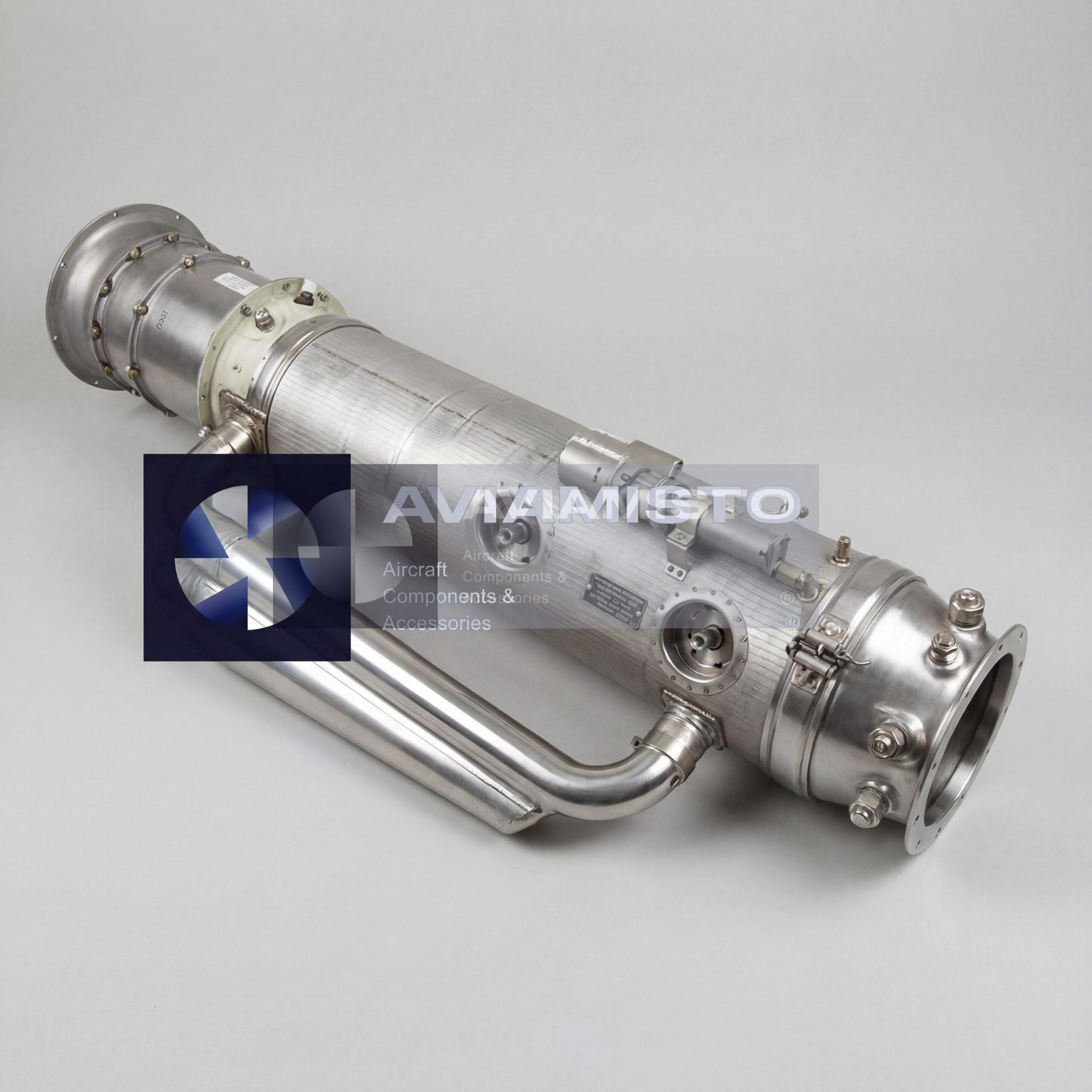
The KO-50 is an aircraft kerosene-fired air heater used in helicopter heating and ventilation systems. It produces heated air for the crew cabin and passenger compartment and can also work in ventilation mode without fuel combustion. On Mi-8, Mi-17 and Mi-171 family helicopters, the heater is a separate onboard thermal unit rather than a simple duct heater. It has its own fuel supply, ignition system, fan, control elements and protection circuits. This allows the helicopter to heat the cabin during cold-weather operation without relying only on engine heat or external ground equipment.
Full descriptionCollapse description
How the KO-50 heats cabin air
The KO-50 burns aviation kerosene inside its combustion chamber, while clean air for the cabin passes through the heat exchanger. The two flows do not mix: combustion gases are discharged outside the fuselage, and the air supplied to the cabin is heated through the walls of the heater section. This layout is important for crew and passenger safety. The heater must deliver enough warm air, but the products of combustion must stay isolated from the breathing air circuit. For this reason, the condition of the combustion chamber, heat exchanger and exhaust path is critical during maintenance.
KO-50 fuel supply and ignition sequence
During start-up, the KO-50 fuel circuit supplies kerosene to the combustion zone and the ignition system initiates burning. The heater works with fuel-system components such as the 748A fuel pump, the 610200A electromagnetic fuel valve, filters, fuel control elements and a spray nozzle. Ignition is provided by high-voltage ignition equipment, including the KV-112 unit and the SD-96 spark plug, depending on the installed configuration. If fuel pressure, ignition or airflow is not correct, the heater may fail to start or stop through its protection logic.
Ventilation and airflow in the KO-50 heater
Air movement through the KO-50 is provided by an electric fan. The fan supplies air through the heater section and then into the aircraft heating and ventilation ducts. In heating mode, this air is warmed in the heat exchanger before entering the cabin. In ventilation mode, the same airflow path can be used without fuel combustion, so the unit works as part of the cabin air circulation system. Stable fan operation is essential: weak airflow can affect heating performance, temperature control and safe operation of the heater.
Automatic and manual control of the KO-50
The KO-50 includes control and protection elements that manage start-up, heating, ventilation, shutdown and abnormal conditions. Temperature switches, fuel shut-off elements, pneumatic relays, control units and electrical circuits work together to keep the heater within its operating limits. The system can maintain the required cabin temperature automatically or allow manual control depending on aircraft configuration. Overtemperature protection is especially important: if the outlet air or heater body reaches an unsafe condition, the fuel supply must be interrupted before the unit overheats.
KO-50 installation on Mi-8 family helicopters
On Mi-8 / Mi-17 family helicopters, the KO-50 is installed in a dedicated area of the fuselage, typically in the nacelle area forward of the right external fuel tank. The installation includes fuel lines, air ducts, exhaust routing, electrical wiring and control connections. Because of this, the heater should be treated as a complete system, not just as a single removable box. When replacing or repairing the KO-50, the surrounding ducts, fuel fittings, wiring, mounting points and safety interlocks should also be checked.
Supply and maintenance of the KO-50 heater
For procurement, repair or replacement, the model should be stated clearly as KO-50. It is also important to clarify whether the request is for a complete heater, a repaired unit, a stored unit, or separate components such as the fuel pump, valve, ignition unit, spark plug or control equipment. Before installation, the heater should be checked for documentation, condition of the combustion chamber and heat exchanger, fuel-system cleanliness, fan operation, ignition performance, electrical wiring and protection circuits. A heater that is complete visually may still require bench testing before aircraft installation.
Related system equipment: 748A, 610200A, KV-112, 1374A-5. These positions are grouped by system function and installation context, not as interchangeable replacements.
Technical details
- Product Type
- Aircraft kerosene heater
- Model / Designation
- KO-50
- Function
- Heating and ventilation of helicopter crew and passenger cabins with heated air
- Application / Where Used
- Helicopter heating and ventilation systems
- System / Installation Area
- Nacelle area, forward of the right external fuel tank
All specificationsCollapse specifications
- Compatible Aircraft / Equipment
- Mi-8, Mi-17, Mi-171 family helicopters and other helicopter applications depending on configuration
- Operating Modes
- Heating; ventilation
- Power Supply
- 27 V DC
- Power Consumption
- 2.5 kW
- Current Consumption
- Approximately 90 A
- Heat Output
- 50,000 kcal/h
- Fuel Type
- Aviation kerosene, including T-1, TS-1, RT depending on documentation
- Fuel Consumption
- 8.7 kg/h
- Temperature Control
- Automatic and manual control modes
- Main Functional Sections
- Combustion chamber, heat exchanger, fuel system, ignition system, fan, automation and protection circuits
- Typical Kit Composition
- Electric fan; 748A fuel pump; 610200A electromagnetic valve; fuel preheater; ignition system with KV-112 unit and SD-96 spark plug; fuel control unit; pneumatic relays item 1263; temperature control system
- Combustion Gas Removal
- Exhaust discharge outside the aircraft fuselage
- Cabin Air Heating Principle
- Clean air heated through heat exchanger walls without mixing with combustion gases
- Weight
- 47.5 kg
- Technical Documentation
- Technical and operational documentation available upon request
Payment & delivery
Orders ship from our hub in Dubai. Partner stock is first transferred to Dubai, then shipped to you.
Dubai stock: 100% before dispatch. Partner stock (Remote stock) and Pre-order: 50% advance payment to start the order and 50% before shipment from Dubai to you.
Availability, lead time, delivery cost and payment terms are confirmed for your order before payment.
Payment & delivery terms